



Your Smartphone Is Not Listening to Your Conversations, But You Should Still Be Concerned
Does this sound familiar? You’re on a phone call. You tell the person on the other end that you’re really craving barbecue for dinner, and within minutes, one of the apps you use serves you an ad for brisket. Or worse yet, you’re not even on your phone when you say this, but the ad still finds you.
By some estimates, more than half of Americans believe their smartphones are spying on them, recording every word they say. To be clear, there’s no evidence that this is true, but the suspicion persists. Digital advertising can feel creepy.
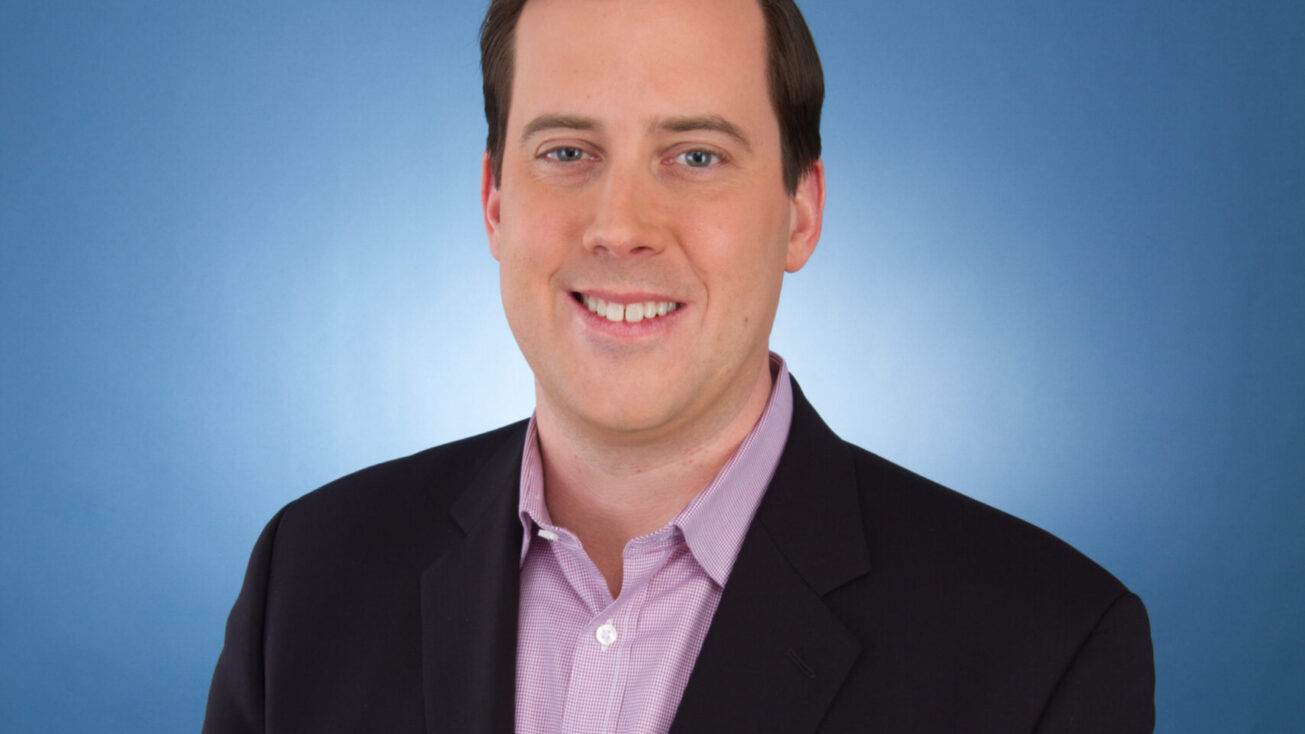
Jeremy Hlavacek feels your pain. He’s run programmatic advertising operations for big companies like The Weather Channel, IBM’s Watson division, and Experian. An industry veteran, Jeremy has advice for entrepreneurs thinking about how to get their companies noticed, and he believes there’s a big difference between what advertising platforms can do and what they should do.
The transcript has been edited for clarity.
Lionel Foster: Jeremy, welcome to Catalyst. Thanks for joining, man.
Jeremy Hlavacek: Very glad to be here. Great to see you.
Lionel Foster: I’m very, very happy to say you’re looking good, you’re looking healthy. Because we met in London, audience, believe it or not, more than 20 years ago. And they don’t eat a whole—
Jeremy Hlavacek: I want to challenge the math on that. I don’t—
Lionel Foster: That’s not how math works. You’re right. It can’t be that long.
But we—I don’t remember us eating a lot of vegetables, because they just weren’t on the menu in our residence hall in London. Or maybe you ate better than I did.
Jeremy Hlavacek: No, I should have eaten more vegetables. And there were times where I consumed a lot of liquids too. I think that there’s a little bit of that as well. But yeah, we’ve held up okay, I guess.
Lionel Foster: Good for us. Yeah. This is mostly a family-friendly podcast, so I’m not going to get too far into some of what we did in London, but yeah, it is good to see you, man.
And it’s remarkable to see your trajectory since we left London. We both studied at the London School of Economics, and you were doing—you were studying media back then, right?
Jeremy Hlavacek: I was, yeah. I’ve always had an interest in it, and that was such a great period in my life, and I’m sure you have—I think you have similar feelings about it. It was just a great community of folks, smart people, interesting problems, great lifestyle. It was good living.
Lionel Foster: So, all right, so now you’re this fancy expert who used to run revenue operations for IBM Watson, and I like to imagine you were just working with a supercomputer every day, playing chess with it, taking walks in the park or something. Somebody was wheeling around a massive machine.
But let me start with the intentionally provocative premise to make this real and your expertise and what you live with every day real for everyone and hopefully interesting.
So it’s amazing to me. I have so many people in my life, like these are smart people, many of them graduate school-educated. You cannot tell them that their smartphones are not listening to them all the time and then serving them ads based on what the phones and the companies behind them hear. They believe this. They swear by it because they feel the coincidence of the relevance of and timeliness of the ads they’re served is just too much.
But people like you consistently tell folks like me, it ain’t happening. What the heck is going on, Jeremy?
Jeremy Hlavacek: Well, that’s it. It’s a really good jumping off point because, yeah, it makes me think back how far we’ve come. Having done this now for several decades myself, and even back to our days in London, I was an early internet person, I guess.
I think my parents probably were like, why don’t you just go to law school? But when I was a young professional in the late 90s, early 2000s, this idea of the internet became a thing, and it was a new type of career that people hadn’t really thought about before. So I took a little bit of a leap and kind of jumped into that.
And at that time, in digital advertising, the term that marketers would use is they would say that advertising prior to digital was not as targeted. So this idea of targeting is very important in media and advertising.
I’m Jeremy, I’m a male, I’m at a certain age and demo, probably products that fit me a little bit better than my wife or my kids or my dad or my friends and neighbors. So understanding consumers and what they want is a big part of marketing and advertising.
But what’s happened over the last few decades with digital advertising and data and AI has made us, in some ways, really good at that. The amount of data that’s out there, the sophisticated ways that it’s used by giant tech companies like Google and Meta and Amazon is really, really impressive.
But at the same time, there’s always a human element in advertising. So I often like to think of it as human relationships and conversations. You may know something about someone, but is it really polite or in good taste to bring up that point?
In advertising, you might know something about a person or a consumer, but does that actually lead to a bad experience? The idea that your phone is listening to you, that’s probably not something that makes consumers and people who use phones—which is everyone—very happy. It makes you maybe a little suspicious of companies like Apple or Meta or whatever.
So in some ways we have great power that’s been created in the last few decades, and I think the industry is trying to figure out how to use it responsibly and productively for businesses and consumers.
Lionel Foster: And just to be clear, my working assumption is that it’s not that our phones are literally listening to us, but that the many data points each of us is producing every day is giving them a power of—you know, educated guesses are so good that it might feel as if they’re listening. And I think you’re confirming what I’m saying.
Jeremy Hlavacek: That’s right. That’s the right way of thinking about it. Okay. Although you never know, there are bad actors out there sometimes, but no, there’s no company out there objectively listening to your conversations.
The reason I think it’s a good question is it also just gets at the idea of privacy and what is in bounds in terms of understanding consumer data. But a long way of answering your question: no, companies are not listening to you today. But yes, AI and predictive algorithms are only getting better, so you’re going to have those moments where you’re maybe a little surprised.
Lionel Foster: I had not even pieced that together. So, over the course of your career, our education—we were in grad school during the early days of the consumer web, and then several years after that the mobile web really kicked in, and then I’m sure you could name other important pivotal points—but yet another is now AI. And the predictive power pre-AI, from my vantage point, seemed to be quite good, and I think you’re saying it’s only getting better now.
Jeremy Hlavacek: It really is. And sometimes I think context is helpful. So again, 20-plus years ago, call it the early 2000s, Facebook didn’t exist. Google was kind of a startup, like a small company. I think they went public in like ’05 or something like that. Amazon was this little cheeky bookseller company.
So in a relatively short period, in terms of our lifetimes and human history, these companies now are remarkably effective at predicting all these things and leading the charge into AI.
I’m sure in your day-to-day you use some kind of chat program, whether it’s OpenAI or Google Gemini or Claude or whatever. But yeah, that pace of change is accelerating, which I think is, in some ways, a great technical achievement, but there are a lot of social questions around this too.
It’s not just purely about the technology. It’s about: are we comfortable doing that, are some of these things legal, should they be legal? Maybe they shouldn’t. So we’re going to face a lot of questions, I think, as a society about how we want to handle these powerful new tools we’ve created.
Lionel Foster: I really like that you’re asking, sure we can do it, but should we do it, and we’ll come back to that.
But can you break down, maybe 100-level course style, for a newbie: how is it that these companies know so much about us? How are they getting the data? How are they using the data? Who is it that’s using the data? What does that ecosystem even look like?
Jeremy Hlavacek: Yeah. Well, look, the first thing I’d say is that marketers have always used data. There were things like the direct mail industry. So when you get a credit card mailer to your house and it’s an American Express card or a Visa card, there’s a marketer who spent time looking at your household address and maybe understanding whether you live in an apartment or a house.
Maybe understanding the general household income in the area that you live. If you live in Beverly Hills, it might be different than somewhere else. There are good indicators out there that maybe this person owns a car: they’ve registered their car with a local DMV.
These sorts of data sets have always been out there, and marketers have used them for mailings and print advertising and a lot of different tools for many years.
I think what’s changed and what’s different is we now engage with digital platforms with great frequency. I don’t know about you, but I’m sure you’re trying to manage how frequently you look at your phone.
You look at websites all the time during the day, and you’ve probably been doing that for many years. So there are a variety of technologies within cell phones and websites—you’ve probably heard of cookies and things like that—which collect data.
I wouldn’t say those technologies were built with the intention of tracking consumers for marketing purposes. Sometimes they’re just useful. When I go back to a newspaper that I read, maybe I’ve logged in, it remembers my address so I don’t have to log in again.
I have a subscription, so I don’t have to give my name and password. It saves time and provides consumer utility.
That’s how a lot of this technology was originally designed: let’s remember that fact about Jeremy so we’re not making him log in over and over again.
Maybe he’s customized a webpage or an app in a certain way. He likes to have sports news up top and politics after, so let’s remember that. Let’s make that a consumer experience.
But what quickly happened is that there are large commercial interests that realized there’s more to that. How is Jeremy prioritizing the content that he reads?
As he’s spending more time in these digital environments, we’re learning about him: his behaviors, the types of websites he goes to, the apps he downloads. Maybe he’s looking at a weather forecast and we’re getting a sense of his location or where he likes to travel.
There are really smart data scientists and technologists out there who have spent decades looking at these data sets, and they’ve gotten pretty good at it. There’s no other way to say it.
Lionel Foster: So as I think about this web activity and the digital trails we’re leaving all the time, in terms of the platforms and entities that can aggregate this data—the major web browsers, Google Chrome being predominant, and then social media companies—those are obvious to me.
Are there non-obvious companies that also have access to loads of this data that might be good for us to know about?
Jeremy Hlavacek: Yeah. The other big category, and I was giving kind of the elementary example, but you’re right, obviously social media is a place where we like things, post links, talk to friends. There’s a lot of information that comes out of that behavior.
Same with search. If Jeremy is searching for a new car, if I’m the marketer at Ford, that’s a pretty good indication that Jeremy might be interested.
The other one I would add is commerce. When you’re spending time on Amazon and searching and shopping, there’s a lot of signal that comes out of that behavior.
It’s like, it’s probably time for Jeremy to buy paper towels again. It’s been about a month, he’s probably running out.
Then to your question about companies we don’t know about: I’ve worked at data companies. One of them is Experian, a credit bureau.
There absolutely are data aggregators and holding companies out there that collect data in different ways and use it in different ways.
Again, it can be a very useful and powerful tool, but great power, great responsibility. These companies tend to be very conservative and often very regulated.
There’s a realization in many circles that data can be powerful and needs to be used responsibly. Most companies do that, but I also appreciate the consumer anxiety that comes with this.
Lionel Foster: Well, let’s get there, because you’ve already mentioned some of the ethical—
Jeremy Hlavacek: Yeah, like I’ve scared the crap out of you already.
Lionel Foster: No, it’s actually super refreshing because sometimes I feel like as a non-specialist, I have an intuition about something. I can explain why it doesn’t feel great, but I don’t have the details about what’s actually happening behind the scenes.
So I guess one place to start is—are there practices that you are concerned about and that maybe you’ve even advocated to change within some of the big organizations you’ve worked for?
Jeremy Hlavacek: Yeah. So this is the part where I’m going to pretend to be a lawyer, but I’m not.
In the data space, there is obviously a lot of law, and there are a lot of practices that generally come from government working with corporations.
The average person—even you and I, who are reasonably intelligent—this is really hard to understand unless you’re very deep in the weeds.
If you think about an elderly relative or someone who just doesn’t care about this, there’s risk there.
There are good legal protections. The general guidelines are the ability to consent. When you see those boxes on websites that say “Do you agree? Do you accept?”—that’s the idea of consent.
Are you okay with sharing your data?
I think there’s probably room for improvement there because most people just hit accept and don’t think about it very much.
Lionel Foster: And they seem like binary choices. The way I read a lot of those pop-ups is you either accept our practice or don’t use our site at all.
Jeremy Hlavacek: That’s right. It can feel like a gating mechanism, which it’s actually not.
One principle is consent. Another is opting out. You can call up companies like Experian and say, “I don’t want to be in your database,” and they’ll delete you.
You do have that power as a consumer.
You can also go into your browser and delete cookies. Companies like Google have mechanisms where you can say, I’d like to delete this profile or not share my data in this way.
The industry has good intentions most of the time, but there’s still room for improvement because most people don’t know how to do these things.
Lionel Foster: Yeah. I imagine one of the dreams of a marketer is to influence your relationship with a brand—not just inform you, but build a relationship, maybe meet you at the right time and nudge you in a direction.
That really came to a head around the 2016 election—Facebook and Cambridge Analytica.
There was an assumption that the right messaging to the right person at the right time could influence voting behavior or even suppress turnout.
I found it hard to believe that digital interaction could have such a strong real-world effect.
Can it?
Jeremy Hlavacek: It’s such a good question. I have many answers. I’m not super familiar with the specifics of Cambridge Analytica. I read the headlines, but I would put it in the category of Facebook data being a little experimental at the time.
We weren’t really sure how it could be used. My sense is there were aggressive marketers who pushed the envelope.
That’s not necessarily a bad thing in business, but we didn’t have a lot of law and regulation, and we weren’t asking whether it was a good idea in a political environment.
I can’t say conclusively what impact it had, but it showed us some of the risks of how this can be used in inappropriate ways.
I do think the industry needs more regulation. I don’t think that’s a negative thing.
These companies are so big that it might be a little anti-competitive. It’s hard to start a new social media company or search engine now.
Lionel Foster: One of the first classes I took in law school was torts. These are acts of negligence or misfeasance or malfeasance that you can be held responsible for even in the absence of a specific statute.
So what it means is it’s almost as if potential liability is in the air we breathe. So don’t be a dummy, be prudent.
It made me view the world differently, and I jaywalked less. So likewise, when I knew we were gonna have this conversation about advertising and I thought about what I wanted to talk to you about—You know, of course I work at a venture capital firm. We’re both in the business world. Suddenly it locked in for me.
Oh my goodness. How many businesses, because they wanna make money and because advertising is such a huge source of revenue—how many business models over time, shape themselves to make businesses essentially types of advertising companies? It is everywhere. It feels almost like a natural law. If you can crack that nut, figure out how to be a conduit between brands and the consumers or businesses they wanna reach. It’s such a basic point, but I hadn’t seen it as clearly as I do now until I was preparing for this.
Jeremy Hlavacek: No, you’re spot on. That’s been a trend in digital media and advertising for at least a decade.
Advertising used to go to publishers. Now it doesn’t necessarily go with content. Search engines, commerce platforms—they’re massive ad businesses.
Retail media networks are a huge trend. Companies like Walmart, Target, CVS are building ad businesses because they have consumers on their platforms at the moment of purchase.
Advertising is extremely high-margin. That’s why companies pursue it.
Lionel Foster: Because you’re in digital advertising, you have a vantage point on where industries are going.
Large language models—OpenAI, Google—are now entering this space. I use ChatGPT and haven’t seen ads, but I wouldn’t be surprised.
Jeremy Hlavacek: They just launched ads in the last few weeks.
The pattern is simple: attract attention, then ads follow.
The question is what kind of ads these will be and who they challenge—Google, Amazon, Netflix—we don’t know yet.
Lionel Foster: So one company implementing ads can shift the entire ecosystem.
Jeremy Hlavacek: No question. This is a dynamic space. It’s hard to stay dominant for decades.
Lionel Foster: At Camber Creek, we don’t love when startups spend heavily on digital ads.
If they do, what should they think about?
Jeremy Hlavacek: I’m aligned with that philosophy. Advertising is a subset of marketing.
If your playbook is just buying Google or Facebook ads, it’s not very creative or differentiated.
You need to think deeply about your customers and find unique ways to reach them. Maybe it’s not digital at all.
The digital world is crowded. Your mission is to stand out.
Lionel Foster: You are the rare example of someone with a hammer who does not see everything as a nail.
Jeremy Hlavacek: I’m trying to be honest here. This isn’t a sales pitch.
Lionel Foster: Jeremy, we covered a lot. I’ve enjoyed this.
Jeremy Hlavacek: I always enjoy our chats. Hopefully you’ll still talk to me after this.
Lionel Foster: Before we wrap, anything you’d like to share?
Jeremy Hlavacek: I remember us playing some hoops back in London. Maybe we need to revisit that with knee braces and Advil.
Lionel Foster: I would love that. Thanks again, man. I’ll see you soon.
Jeremy Hlavacek: Thanks, Lionel. Take care.
Lionel Foster: We want to hear from you. If you are a catalyst changing entire industries or rewriting a rule book, let us know at catalyst@cambercreek.com, and we might have you on the show.