



AI is Biased. Latimer Wants to Fix That.
ChatGPT is biased. So are Claude, Gemini, Grok, and even non-computer-based reasoning systems—that is, people. Computers have inherited and amplified many of our blind spots. But is it okay to acknowledge that? And if it is, what should we do about it?
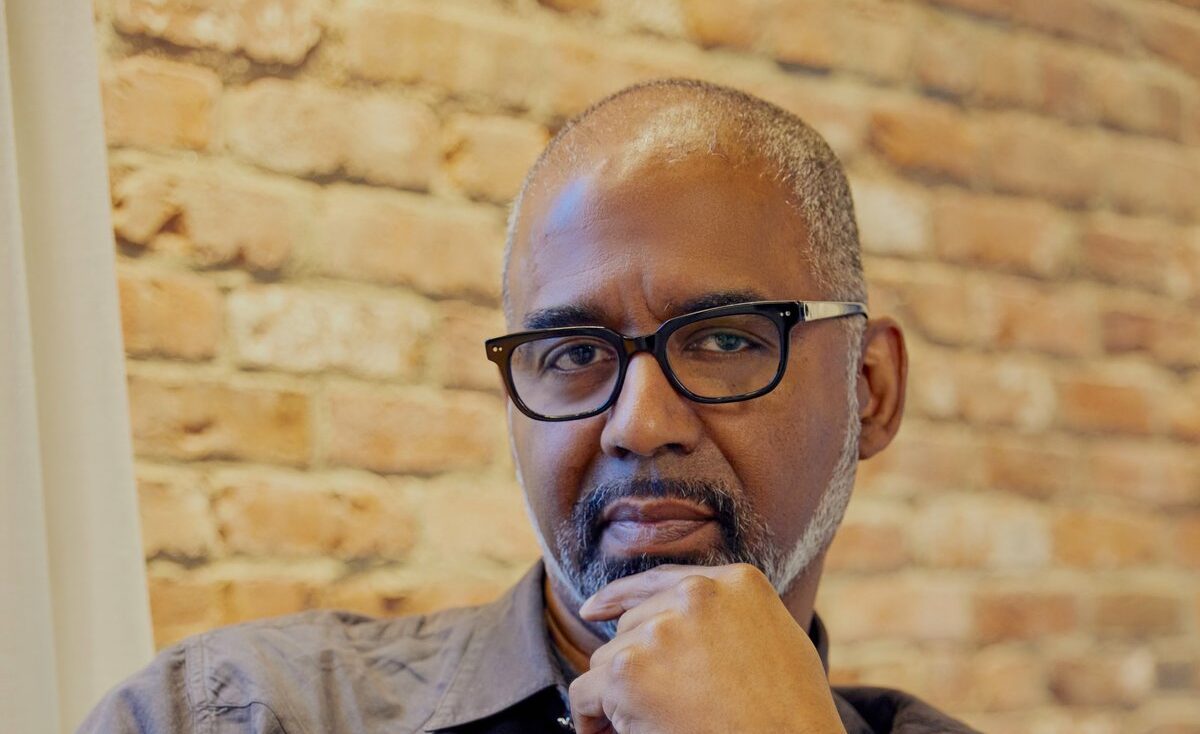
John Pasmore is answering that question.
John is founder and CEO of Latimer, a model that can work on its own or in concert with larger foundation models to create more robust and accurate results for queries that require an understanding of Black history.
Latimer has traction with educational institutions and a partnership with Grammarly—clear early signs of success. One thing Camber Creek discussed with John is the right metaphor for Latimer’s function. If it’s relevant only for specific queries, maybe it’s a microscope. But if foundation models simply aren’t comprehensive enough, then tools like Latimer are more like glasses or contact lenses—something people need to use far more often.
Which analogy customers agree with may determine the company’s trajectory.
The transcript has been edited for clarity.
Lionel Foster: John, welcome to Catalyst. Thanks for joining.
John Pasmore: Thank you for having me. Kicking off the new year.
Lionel Foster: Camber Creek talks to a lot of entrepreneurs—more than a thousand startups a year across about thirty countries. But you have one of the more interesting backgrounds in tech entrepreneurship I’ve seen. We’ll talk about Latimer and AI, and we’ll even dare to talk about race and AI.
But first, you used to work with Russell Simmons. You were part of a network that defined hip-hop culture as it blended into everything else. How did you get started in media?
John Pasmore: I actually started in banking. I was a Series 7 and 63 licensed stockbroker. I moved to Houston, Texas, and while I enjoyed banking, the culture there was far more restrictive than New York—white shirts, very uptight.
That pushed me to change gears. I noticed the nightlife scene was underserved, so I created a media company—a nightlife guide—that grew into a printed magazine. It started as a side gig, but once advertising took off, it became obvious I needed to do it full-time.
Lionel Foster: So you left banking and jumped fully into media?
John Pasmore: Yes. We sold out our ad inventory constantly and kept reformatting to fit more ads. Eventually I left the bank, which kicked off a long entrepreneurial career.
This was early desktop publishing—producing magazines on a laptop instead of through expensive legacy systems. That lowered costs and let us experiment. We eventually sold the business.
Lionel Foster: You moved rom Houston to New York. What happened next?
John Pasmore: I looked at New York from afar and saw Russell Simmons. He had management, a modeling agency, Def Jam, Phat Farm—but no media company. I wrote a business plan and moved to New York determined to meet him.
Eventually I hired his brother Danny Simmons as art editor, which gave me access to Russell. He became a partner, and we ran One World magazine for 10 years.
We also created a TV show with Warner Brothers, One World Music Beat, and partnered with Hearst. From 1995 to 2005, we were right in the middle of hip-hop becoming pop culture. We didn’t know it at the time, but it was a historic period.
The idea behind One World was a monoculture—kids of all backgrounds watching the same TV, loving the same music, wanting the same sneakers. Russell saw that future early.
Lionel Foster: Eventually traditional media began to break.
John Pasmore: Exactly. By 2005, print was being disrupted the same way music had been. We sold One World to Urban Box Office and I went to work with Trace TV in Paris, helping them expand into the US.
While there, I saw a German-based travel channel, Voyages TV, that combined commerce with video. That model didn’t exist in the US, and cable operators were saturated with music channels but had only one travel channel.
I partnered with Voyages, raised $10 million, expanded in the US, and sold the business in 2013.
Lionel Foster: On the talent side, hip-hop was Black-led. On the investor side, not so much. Was that your experience?
John Pasmore: Often, yes. Though for Voyages we were backed by Syncom Venture Partners, a Black VC fund out of DC. They understood media deeply.
Still, as a Black entrepreneur, you often raise capital outside your immediate community and sell to people who don’t look like you. There’s always a bridge to cross.
Lionel Foster: You were already successful, yet you went back for a computer science degree. Why?
John Pasmore: I’d always wanted to understand how things actually work. Technology was eating the world, including media. Computer science felt inevitable.
While earning that degree, I took AI courses. None of us predicted ChatGPT’s capabilities, but when it launched, I knew enough to see both how powerful it was and how biased it could be.
As a parent, I saw examples of bias everywhere. And I realized big companies weren’t going to fix it just because people complained on Twitter. That created a commercial and moral opportunity.
Lionel Foster: So what is Latimer?
John Pasmore: Latimer is an AI platform that augments large language models with a purpose-built database—textbooks, dissertations, and archives like the New York Amsterdam News.
It gives LLMs additional historical and cultural context about Black and brown communities. It prioritizes that information because it understands it’s intentional and important.
Lionel Foster: This is about completeness as much as inclusion.
John Pasmore: Exactly. Garbage in, garbage out. If people were excluded from history, they’re doubly excluded from AI unless we fix it.
Many archives—Frederick Douglass papers, David Dinkins’ mayoral records—aren’t digitized. Making them AI-ready is a major part of our mission. We’re working with institutions like Howard University to do that.
Lionel Foster: You’re striking bespoke deals with institutions. Does that set you apart?
John Pasmore: Increasingly, everyone is moving that way due to copyright lawsuits. We’re also building a marketplace—the Known—where data owners can license their content directly, like an eBay for data.
Institutions can participate and keep control while being compensated.
Lionel Foster: Where does Latimer resonate most?
John Pasmore: Higher education, especially social work programs. Southern New Hampshire University uses Latimer across all social-work classes.
Healthcare is another huge opportunity. Bias in care leads to lawsuits and poor outcomes. AI that can identify disparities early has massive value.
Lionel Foster: Is Latimer venture-backed?
John Pasmore: We’re backed by mission-aligned high-net-worth individuals. That matters. I don’t want to build this only to sell it to a company that deprioritizes the mission.
I watched Henry Louis Gates sell Africana to Microsoft only to see it disappear into Encarta. I don’t want Latimer to become invisible.
We’re building for longevity. We’re approaching cash-flow positivity and exploring dividend-based structures rather than acquisition-driven exits.
Lionel Foster: It sounds like you have alignment—capital, governance, and mission.
John Pasmore: For now, yes. It’s a fast-changing landscape, but today things look good.
Lionel Foster: John, thank you. This was a great conversation.
John Pasmore: Thank you. I appreciate it.