



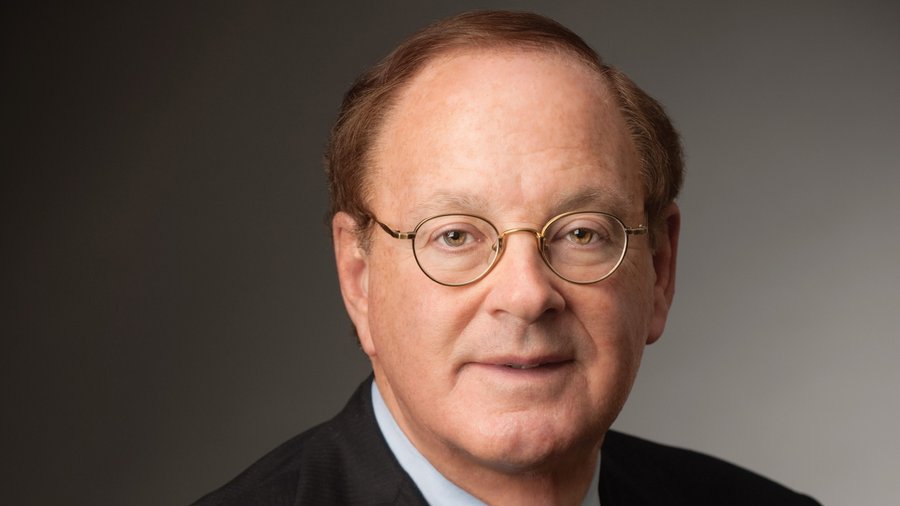
Bruce Toll Built a $15 Billion Company by Helping American Families Go Up-Market
Bruce Toll, working with his brother Robert, built Toll Brothers from two houses in Pennsylvania into one of the largest home builders in America, which today has a $15 billion market capitalization.
We wanted to find out how he managed this, because housing is a very local product. Most local developers don’t become regional players, and practically no one reaches national scale. But Bruce Toll just keeps going.
Real estate has been his base. However, he also has large positions in healthcare, natural resources, and even produced more than 100 films.
During his conversation with Camber Creek General Partner Jeffrey Berman, it became clear that Mr. Toll invests as much in people as he does in businesses. His relationships open unexpected opportunities and new spaces where he can build.
Jeffrey Berman: Well, Bruce, thank you so much for sitting down. This is a rare honor and a pleasure to speak to someone who has been in the real estate industry as long as you have and is, frankly, a legend in the industry.
You’re normally not supposed to say that to somebody when you’re sitting in front of them, but I’m going to say it anyway. He’s a legend.
I really do appreciate this. Obviously, anyone listening to this or watching this will have heard Lionel’s introduction. But can you tell us about the early days of your business, specifically how you and your brother got started building homes in Philadelphia?
Bruce Toll: My brother and I worked for my father when I was 13. He was a home builder after World War II. In 1956, I worked the summer driving a Jeep and moving things around one of the communities he was building in the suburbs. My brother worked on it also.
Then we went back to school in the fall. Eventually I went to college and came home afterward. While I was in college, I always knew I wanted to be a home builder.
My brother went to law school and became a lawyer.
I came back and found a couple of lots to build two houses on. As soon as I did that, my brother said he didn’t want to be a lawyer anymore. So I had to change the name of the business from Toll Enterprises to Toll Brothers. And that’s how Toll Brothers started.
Jeffrey Berman: So with just those two or three lots that you started with, the business now is obviously very different, and the real estate business now is very different than it was then.
Where did you get the capital to start?
Bruce Toll: The lots were $2,500 apiece. My father introduced me to his banker, who was at First Pennsylvania Bank, which doesn’t exist today. I think it eventually became part of Wachovia and then Wells Fargo.
The bank was at the corner of 15th and Chestnut in Philadelphia. I went to the banker and told him I wanted to borrow $30,000.
Jeffrey Berman: What year was this?
Bruce Toll: 1967.
Jeffrey Berman: Okay. So real money.
Bruce Toll: Yes, $30,000. He said he would give me as much as I wanted. I asked why. He said, “Well, I started first grade with your father, and I’ve known him ever since. This is 50 years later. I’ll do whatever he asks.”
Jeffrey Berman: Wow. And you can choose not to answer this, but what type of guarantees were involved? Because that’s an amazing story, to walk into a bank and borrow money like that.
Bruce Toll: It was only $30,000. My brother and I personally guaranteed it, but we didn’t really have any assets. Banks were very liberal in those days.
Jeffrey Berman: And these were the first houses you were building completely on your own?
Bruce Toll: Yes. We had built a couple before that while I was still in college through another gentleman, but these were the first ones we did on our own.
Jeffrey Berman: And how did those projects turn out?
Bruce Toll: Before we even finished the two houses, people were coming by and looking at them. They liked what they saw. There were more lots next to the two we had purchased. Actually, the two lots were part of a subdivision of about 250 lots that someone had gone bankrupt on.
We had a street with about 12 lots ready to move in on. So we picked up the rest of the lots for $2,500 apiece and expanded over the next year and a half or two years. Eventually we built all 250 lots. People kept buying before we could even finish the houses.
Jeffrey Berman: Wow. Just for people who might not be familiar with the terminology, were these fully entitled lots, or did you have to do the entitlement work as well?
Bruce Toll: No, they were fully entitled when we bought them.
We built two styles: a two-story Colonial, which was common in 1967, and a bi-level house. You walked in the front door and immediately either went upstairs or downstairs. There was no hallway. We don’t even build bi-levels anymore.
Jeffrey Berman: At that moment, how much time elapsed between those first two houses and finishing all 250? And was that the only project you were working on at the time?
Bruce Toll: It took about two and a half years. But before those two and a half years were up, we knew we had to start another project.
The first one was outside Downingtown, Pennsylvania, in Chester County. Then we went to Bucks County in Upper Southampton. We bought another subdivision that was already fully approved. A friend of my father’s had gotten it approved and sold it to us.
Then we bought a farm, and after that we started doing the entitlements ourselves.
Jeffrey Berman: This podcast is produced by a private equity firm that also has a venture capital practice. So I naturally think about things in terms of scaling. You scaled pretty quickly. Did you think about it that way at the time?
Bruce Toll: No, we didn’t think about it like that. We just knew we wanted to keep building. So we went back to the same banker, and he was happy to lend us more money because the first community had been successful. You have to remember the time period. This was the late 1960s into the early 1970s. Banks had plenty of money, and lending money was their business.
Jeffrey Berman: You built the homes yourselves. Were you acting as the general contractor?
Bruce Toll: Yes. We were the general contractor, but we subcontracted everything: roofers, electricians, bricklayers, heating contractors. I ran the whole company.
Jeffrey Berman: Going from two lots to 250 homes in two and a half years requires a scaled labor force. How hard was that?
Bruce Toll: It wasn’t hard. The labor was there. You just went around to other builders and hired their carpenters. You’d ask them, “Can you come work for us instead?” Labor was plentiful in the 1960s. People were getting married and building houses. That’s just how the economy worked then.
Jeffrey Berman: Today developers do demographic studies and feasibility studies before they build. Back then, what kind of analysis did you do?
Bruce Toll: We decided ourselves. The first houses sold for $17,000. Today those same houses sell for $600,000 or $700,000. Of course that’s sixty years later, and inflation helps real estate. If you buy a house and pay off a thirty-year mortgage, it’s almost always worth more than when you bought it.
Jeffrey Berman: Most local developers never reach regional scale, much less national scale. When did you and your brother decide you wanted to become national home builders?
Bruce Toll: We didn’t decide that. We started in southeast Pennsylvania: Chester County, Bucks County, Montgomery County. Then one day we saw a piece of land across the Delaware River about 10 miles away, so we crossed the river into New Jersey. Then we kept going north into New Jersey. After that we crossed another river and went into New York and Connecticut. Then we expanded to Maryland.
We became national home builders almost by accident. At that time there were very few national builders. US Home existed, and there were a few others, but not many.
Jeffrey Berman: Were there geographic challenges as you expanded?
Bruce Toll: The biggest difference was the price of land. We could build the exact same house in Pennsylvania and then build the same house in New Jersey or New York, but the land cost more. So the price of the house increased. Otherwise, the houses themselves were basically the same.
Jeffrey Berman: Toll Brothers eventually became known for luxury homes with significant customization options. That appeals to high-end buyers, but I imagine it can complicate scaling. How did you balance offering that level of personalization while still growing the company nationally?
Bruce Toll: When we got to our third community, which was in Bucks County, my father, w, ho had retired by that timegave us one piece of advice. He had retired when I was still in high school. He moved down to Boca Raton, which we used to jokingly call “God’s waiting room.”
His advice was simple. He said, “Build more upscale houses.”
He said there were a million competitors building lower-priced houses. But if you build houses that cost ten or twenty thousand dollars more, you’ll have fewer competitors. You won’t have as many customers, but you’ll make more money. And the customers won’t complain as much.
Jeffrey Berman: And did that turn out to be true?
Bruce Toll: Absolutely.
Jeffrey Berman: Even the complaining part?
Bruce Toll: Yes, absolutely.
Jeffrey Berman: That’s interesting. I would have assumed that as homes become more customized, buyers might become more particular or demanding.
Bruce Toll: No. By the time people are buying our homes, they’re usually second-time or third-time buyers. We call them “move-up buyers.” People buying their first home often expect it to look like the homes they see on television. They think it’s going to be perfect, like a house on a sitcom. But that’s television. Real houses aren’t perfect.
Jeffrey Berman: With more than 50 years of experience building homes, you’ve seen tastes, family needs, and housing design evolve. What stands out as the biggest change in what people want from housing today compared to forty years ago?
Bruce Toll: In our type of housing, people want bigger and better. The ceilings are higher, for example. When we started, ceilings were eight feet high. Then we moved to nine-foot ceilings. Eventually we went to ten-foot ceilings on the first floor.
Jeffrey Berman: Were you among the first builders to do that?
Bruce Toll: Yes. Custom builders had done it before, but large-scale development builders hadn’t.
We did the same thing in apartments. When we were building apartments in the 1970s, we learned what people liked and gave them better materials: better shower doors, better kitchen cabinets, better appliances. Those things matter to customers.
Jeffrey Berman: And you were able to charge a premium for those upgrades?
Bruce Toll: Yes. Often you could get back twice what you spent.
If you spend an extra $150 on a better shower door, you can often charge $300 more for the apartment or the house. Customers appreciate the quality.
Jeffrey Berman: You mentioned earlier that you were among the first builders to introduce 10-fooot ceilings at scale. Were there other innovations or technologies that you adopted before the modern wave of real estate technology?
Bruce Toll: Yes. In the late 1970s we built our own panel plant. It manufactured wall panels and roof trusses.The plant was in Morrisville, Pennsylvania, in Bucks County. We saw an advertisement for machinery made in Sweden that could automate a lot of the work. So I flew to Sweden with one of my employees. We brought an entire tractor trailer full of American lumber with us, because Swedish lumber is sized differently. We use two-by-fours, two-by-tens, two-by-twelves. They didn’t. We worked with them for a week while they programmed their machinery to work with American lumber.
Jeffrey Berman: You literally brought lumber to Sweden?
Bruce Toll: Yes, by boat. You couldn’t exactly carry it on a plane.
We worked with their engineers while they rewrote the computer programs. They kept feeding us salmon the entire week. We must have had every kind of salmon imaginable.
Eventually they got the system working with American lumber, and we bought the equipment. We shipped everything back to Pennsylvania and set up the plant.
Jeffrey Berman: And that saved you money?
Bruce Toll: Yes. It reduced the number of carpenters needed on site because the walls were pre-built.
Jeffrey Berman: That must have required a pretty significant upfront investment. Did you hesitate?
Bruce Toll: We bought an empty factory in Morrisville that used to produce bathroom tile. Then we converted it into the panel plant. It worked out very well for us.
Jeffrey Berman: Toll Brothers today is known for being fairly technology-forward, and the company is an investor in Camber Creek. It’s fascinating that your appetite for innovation goes all the way back to the 1970s. The real estate industry often has a reputation for being resistant to technology.
Bruce Toll: That hasn’t been our experience. We were always willing to adopt new ideas. Sometimes it was technology, and sometimes it was simply using better materials. For example, we used higher-quality roofs, better cabinets, and solid wood materials instead of cheaper composite materials. Those things made a difference.
Jeffrey Berman: Let’s shift to construction challenges. Today, builders face labor shortages, tariffs, and supply chain issues. Looking back at the growth phase of Toll Brothers, what lessons stand out from how you managed cost pressures?
Bruce Toll: When we started, almost everything we bought was made in America. Kitchen cabinets were made in Pennsylvania. Shower doors were made locally. Appliances were made by companies like General Electric or Whirlpool. Today, a lot of those products are manufactured overseas. For example, we now buy kitchen cabinets from Vietnam.
Jeffrey Berman: How do you think about that from a cost perspective?
Bruce Toll: We don’t have much choice. The bigger issue is labor. Fewer people want to work with their hands. For generations, parents have told their children to become doctors or lawyers. As a result, it’s harder to find skilled carpenters or tradespeople. Historically we’ve relied heavily on first-generation or second-generation immigrants to do construction work.
Jeffrey Berman: What do you mean by first-generation or second-generation?
Bruce Toll: Immigrants. My grandfather was a plasterer when he came to the United States. Like most parents, he wanted his children to go to college. Two of them did. Two went straight to work. My parents wanted my brother and me to become professionals too—doctors, lawyers, accountants. My brother did go to law school, but he didn’t stay in the profession very long.
Jeffrey Berman: He decided he wanted to make real money.
Bruce Toll: He just didn’t like practicing law. He worked in a very small law office in Philadelphia. I remember visiting him there. The office was tiny—maybe three lawyers in a space smaller than this room. Eventually he decided to join me.
Jeffrey Berman: Toll Brothers started as a family business. Looking back, what do you see as the advantages—and maybe the drawbacks—of working with family?
Bruce Toll: In our case it was simple. There were only two of us. My brother and I started with a tiny office, two rooms. We hired a retired woman to serve as our bookkeeper and secretary. My brother and I sat at two desks facing each other. That was the entire company.
Jeffrey Berman: Your father had retired at that point. Did he ever think you were doing things the right way?
Bruce Toll: He was proud of us, but he always thought we were doing things wrong. He would visit and say everything was different from how he did it 25 years earlier. When we sold our first house for $17,000, he thought it was only worth $10,000. But he had been out of the business for years.
Jeffrey Berman: Eventually you took Toll Brothers public in 1986. What motivated that decision?
Bruce Toll: If you want to become a large home builder, you need access to capital. Before we went public, every time we wanted to build a new community we had to prepare huge loan packages for banks. It involved enormous amounts of paperwork. When you’re public, the process becomes much easier. Banks are more comfortable lending to you. So when Drexel Burnham approached us and offered to help take us public, we agreed.
The company was valued at about $120 million when we went public. My brother owned one-third, I owned one-third, and the public owned one-third.
Jeffrey Berman: That’s a pretty good outcome.
Bruce Toll: Yes. That $40 million portion we sold to the public was probably equivalent to $200 million today.
Jeffrey Berman: So in many ways you went public for efficiency—access to capital and reduced paperwork.
Bruce Toll: Exactly. Today Toll Brothers builds hundreds of communities across the country. It would be impossible to finance that many projects individually through banks.
Jeffrey Berman: You’ve also built an impressive family office, BET Investments, with investments across many industries.
Bruce Toll: Yes. It’s essentially a family office with about 10 or 15 different businesses. We’ve invested in auto dealerships, healthcare, real estate, natural resources, and even film production.
Jeffrey Berman: Film production?
Bruce Toll: Yes. Over about 25 years we produced around 100 movies.
Jeffrey Berman: One hundred?
Bruce Toll: Yes. Films like The Kite Runner. I was an executive producer on many of them.
Jeffrey Berman: That’s incredible.
Bruce Toll: I partnered with Sidney Kimmel in a company called Sidney Kimmel Entertainment. We eventually sold the business a few years ago.
Jeffrey Berman: You’ve also invested in healthcare businesses.
Bruce Toll: Yes. We invested in a company that operates methadone clinics. The original owner was diagnosed with cancer and wanted to sell the business. A group of us bought it for $5 million and hired a professional management team. Today that company operates around one hundred clinics across the country.
Jeffrey Berman: That’s a fascinating portfolio.
Bruce Toll: It happened gradually over time. Sometimes I invested because of relationships, sometimes because of opportunities that appeared unexpectedly.
Jeffrey Berman: If you were starting your career today, what industries would excite you most?
Bruce Toll: Real estate still excites me. Banks still lend money, and real estate still offers opportunities if you have some starting capital. I continue to build apartments today. Through BET Investments we own about 5,000 apartment units. Most of them are in the suburbs of Philadelphia and in Florida.
Jeffrey Berman: Florida seems to be winning demographically right now.
Bruce Toll: People have been moving to Florida for decades, not just recently.
Originally most of the newcomers were retirees, people over 60. That’s why Florida got the nickname “God’s waiting room.” But today it’s attracting people of all ages.
Jeffrey Berman: If you were starting a real estate business today, where would you focus geographically?
Bruce Toll: I would probably focus on the Southeast: North Carolina, South Carolina, Georgia, and Florida. It’s much easier to get development approvals there.
In Pennsylvania the approval process can take years. I have projects outside Philadelphia that I’ve been working on for five years and still don’t have final approval.
In Florida the process is much faster.
Jeffrey Berman: Yet Pennsylvania is still a strong market for you.
Bruce Toll: Yes, because the demand is strong. Everything we build there sells very quickly.
Jeffrey Berman: Bruce, thank you so much for spending time with me. This was a personal thrill, and I know our listeners will learn a lot from your experience.
Bruce Toll: Thank you for having me.