



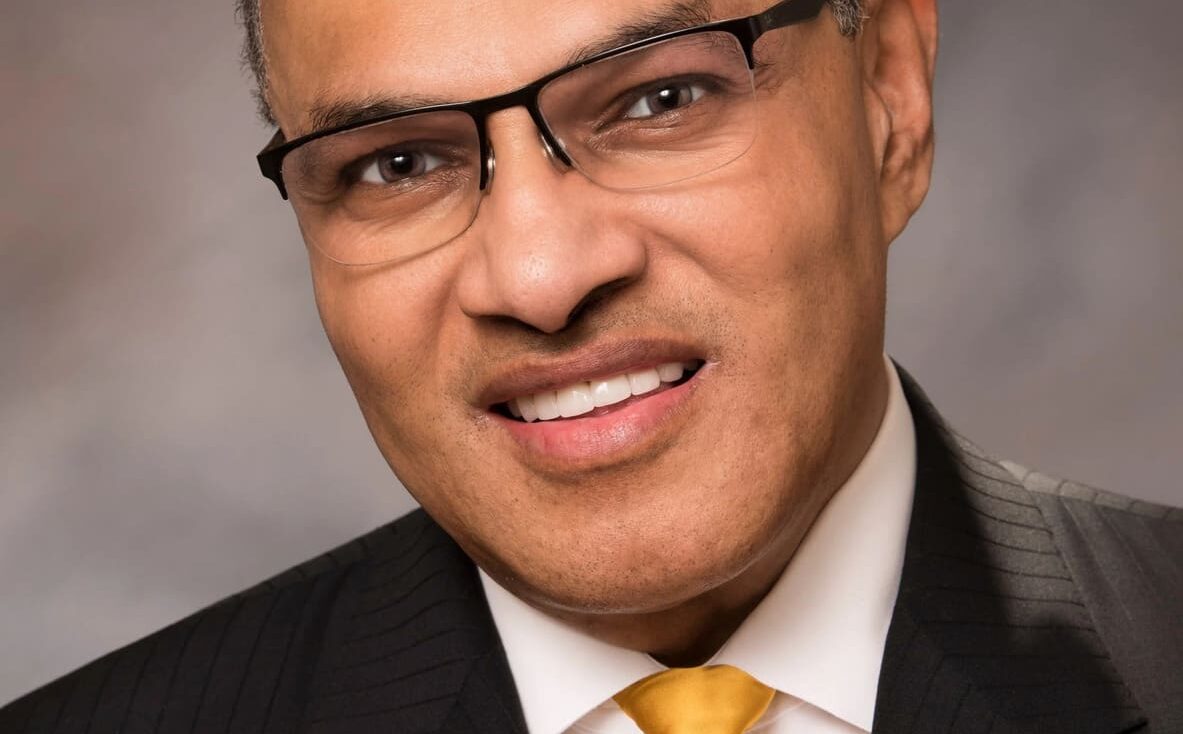
Catalyst by Camber Creek Episode 2, Freeman Hrabowski
It is possible that Freeman Hrabowski has done more to improve training and access to STEM careers (science, technology, engineering, and math) than anyone else alive at the moment. As President of the University of Maryland, Baltimore County from 1992 to 2022, he co-founded the Meyerhoff Scholars Program, which created resources and a campus environment where underrepresented students could thrive in some of the toughest majors on campus. The techniques that helped future African-American scientists, doctors, and engineers were eventually mainstreamed at UMBC and helped thousands of students of all backgrounds.
Inspired by his work, in 2022 the Howard Hughes Medical Institute launched the Freeman Hrabowski Scholars Program to support outstanding researchers, who have strong potential to become leaders in their fields. Access and high achievement. Dr. Hrabowski is a strident advocate for both and has spent his life supporting programs and leaders that combine the two.
He came by this commitment honestly–and dangerously–when he was very young, which he explained to me and Jake Fingert, Managing Partner at Camber Creek.
Transcript
Jake Fingert: Freeman, thank you so much for joining us. Lionel has shared a lot about your background and what an incredible background it is.
I was hoping we could really just start with your childhood. And I’d love to hear a little bit about how you grew up and how that shaped who you are today as a starting point for this discussion.
Freeman Hrabowski: Sure. I am from the South. I am a southerner, Deep South. You know, I spent most of my career in Baltimore, but—and I call Baltimore “the Upper South.”
We in Baltimore, we think like Philadelphia one day and Richmond the next. Alright? But I grew up in the Deep South, Birmingham. And what I can tell you is that I was a privileged child in that my parents were educated, had been teachers—and at the same time a privileged black child.
And what that means is that as a child, I knew early on that I had my place, that we could not go into stores and be seen immediately. Or we couldn’t sit certain places, that in the larger white community we couldn’t drink out of water fountains. It was very limiting that way. And yet in the black community, we were told we were very special, and I was very privileged to be in the church and in a school where teachers continued to tell us to set high standards and to work to be twice as good as we could possibly imagine, because the world was not fair. And that resulted in my parents doing a lot of things to give me extra support, to learn to read at an early age, and to go through school early and to take piano lessons. To read more books and to do a lot of math.
And when Dr. King was a part of our church experience, I was inspired. I did march and became a child leader, and I did go to jail for a week, which was transformational. That led to my thinking about both social justice and leadership, and it shaped my vision of myself for the future.
And that was my childhood through—I went to jail at 12 and that shaped that experience. And within three years, I was in college—
Jake Fingert: Sorry. Freeman, I wanna hear more about jail and also marching with Dr. King before we get to college.
Freeman Hrabowski: Great. I appreciate you doing it just that way.
I can talk as long or as short as you want, so you can cut me off when I’m too long or make me go longer. Yeah. But I can go on and on. I will tell you and lemme just talk and you stop me when you want.
I was sitting in the back of church in the middle of the week, not wanting to go there. We southerners tell stories, you know. We like to weave a story, and I didn’t wanna go. My parents placated me with the two things I love most. I was a chubby little kid, so they gave me my, M&Ms, the good kind with the peanuts. And they let me bring my algebra book. I was a precocious little kid, so I’m there about to go to the tenth grade. It’s May. I’m only 12, but I’m doing my algebra, eating my M&Ms. And they told me to listen as much as I would. And I’m listening to this guy, I’m sitting in the back, and he said something that really gave me pause.
He said, “And if the children participate in this peaceful protest, they’ll be able to go to better schools.” And we all knew what that meant. That meant we’d be able to go to the white schools. Now, why did we think the white schools were better? Well, first of all, they were structurally, they were nicer schools, the nice brick schools. But for me, the big deal was we knew we were getting the hand-me-down books. After white schools used them for years, then they would give them to us. I have stories about that. So we had been given the message in subtle and not so subtle ways that our education was inferior to those of white children.
Though it was clear that we had some really committed teachers, who were giving us the best that they had. And we were working hard. But I did want to experience that supposedly that superior education, because I wanted to see how I compared, because I had been told I was smart. That was the word we were using. And to me, smart meant I was intellectually curious, and I worked very hard.
I would get punished for not going to bed, for turning the light back on and studying after my parents said I had to go to sleep. I wanted to keep working, and I wanted if I would as hard in working as anybody else, if not better. And so when he said he wanted kids to go to jail, I wanted to go. I went home, and I said, “I’ve gotta go. I have to go.” And they looked at me and said, “Absolutely not.” I was a rebellious kid, and I looked at them and I said, “You guys are hypocrites. You told me you wanted me to go and listen. I did, kind of, and I now want to go. And you’re saying I can’t. What do you think? I’m better than other kids?”
My dad was a little upset, and he said what a typical dad would say: “Go to your room, boy.” And I knew I was in trouble. And, they came in the next morning. They had not slept. They had discussed it all night, and I could tell they looked like they’d been crying.
I was really worried. And I said, “What’s wrong guys?” And they said, “It’s not that we didn’t trust you. We don’t trust the people who would be over you in a jail. They’d all be white. We don’t trust them, but we trust God. And if you want to do this, we will put you in God’s hands and you can go.”
Now, I had a cousin who was growing up with us, and they said, “And Paul will go with you.” He was a little older, and he said, “Uh uh. I’m not going.” And he laughed at me. He said, “Because they gonna get him. They’re gonna get him.” Yeah. So I was a little frightened, but I had to go. And they did allow me to go and take the training.
At my church—and they did give us a few hours of training—and the training involved preparing us not to get angry and not to throw rocks and not to start fighting and to prepare for dogs barking and to prepare for police who would try to make us angry. And to learn how to lead the singing of songs.
And that’s what we did. And so we did march, and the police did say things to try to make us angry. We’d keep singing those songs. “I ain’t gonna let nobody turn me around, turn me around, turn me around. I ain’t going to let nobody turn me around. Keep on walking, keep on talking. Marching into Freedom Land.” And that music from coming from all these directions, from these children.
If you see the old movies … You know, that music elevated us and through the fear, ’cause I was not a courageous kid. The only thing I’d ever attacked in my life was a math problem. If kids broke out in fights in school, usually little fat Freeman was running the other way. All I got was As.
My students said, “Doc, you must have been real courageous.”
No, I wasn’t. No. I just wanted a better education. But we marched. We got up to the steps of City Hall. ’cause people always say, “Well, why did you go to jail?” Well, we went to jail because Dr. King and the others had asked for permission to march, and city officials would not give us permission to have a peaceful protest.
And so we were marching anyway. And so I got up to the steps of City Hall. And it just so happened by that time—I’m leading my little group. There’s a picture of me, and at that point I’m right towards the back of the line, but it’s cut off in such a way that by the time we got up there, I’m in the middle, the front of my group. And Bull Connor, the police commissioner, I’ll never forget that red face.
He was so angry, because TV cameras were right there with him. He was angry, because he did not want his city being shown that way. And he looked down at me and said, “What do you, what do you want, little niggra?” N-I-G-G-R-A was the word. And I looked up at him and I said, “We want to kneel and pray for our freedom, sir.”
And he spat in my face. He spat in my face, picked me up, and threw me into the police wagon. I’ll never forget that. Off to jail we went. And we spent four nights, and five days in a horrible experience. Imagine being in jail with all the—and we were in the jail for children who were under14, kids who were not the high school kids.
They had this building, and it was not enough space, not enough bathrooms. Kids like from eight, nine, up to 13 and a lot of kids crying, but on the floor, and imagine, as I said, not enough bathrooms. Imagine what that means and put in with the bad boys. Imagine that too.
Just imagine the horrors of that experience. And the other part I would say besides the horrors would be in the middle of that experience, Dr. King coming with our parents and saying to us as we are looking out the windows, “What you do this day will have an impact on children who’ve not yet been born.” We did not fully understand it, but children are crying and parents are trying to be strong. But we sense the profundity of that experience, and all these little kids are, you know, crying, “I want my mama.” It was just really, it was horrible—empowering though, but horrible. And the one way I kept—I had a little group I was taking care of.
The way I kept my little group from getting beat up, ’cause some of the kids were getting beat up in so many ways. The one thing they gave us, ironically—and you see this in the South—Bibles. We didn’t have enough bathrooms, beds, but they put Bibles in there. It’s so ironic how we use Christianity.
Late at night, I would be reading scripture to them and having them repeat it. Just trying to get their minds off things. And every time some boy would come over like he’s getting ready to kick one of us or something, I would read, “The Lord is my shepherd.” They would say, “The Lord is my shepherd. I shall not want.” And the kid would move away. They were scared of Jesus. The bad boy wouldn’t—I’d be half asleep and I. And all night long I, all I did was call on the Lord. And my kids did not get hurt. They did not. So I was glad for those Bibles, because as I said, I was not a courageous kid, but it kept us–
Lionel Foster: So Freeman, it’s really noteworthy to me: You called them “my kids.”
Freeman Hrabowski: Oh yeah. Because I was 12, and I was getting ready to go to tenth grade. They were like fourth and fifth grade. Yeah, I was. Thank you. My parents were older. I was older.
Jake Fingert: Freeman, let me just first of all say thank you for your courage. I mean, what an incredible story and things that you andyour fellow marchers did.
One of the things that also really strikes me about that story is not only your courage but also the courage of your parents. I mean, it sounds like you had some really thoughtful parents, and they, it sounds like they went in knowing that something like that could happen and the risk that you were taking on as a young kid.
Freeman Hrabowski: I was naive. I was so naïve, because I have often thought, “Would I have allowed my son or now my grandson, who’s 13—would I have allowed them to have that experience?” I’m not sure I would. That’s how courageous my parents were and what I used to convince my mother. My dad would usually follow my mother’s lead.
My mother had been fired from her job. This was in 1963. In 1948, my mother led a protest of colored teachers for the equalization of teacher salaries in a county outside of Birmingham. ‘Cause teacher salaries were about 60% colored teacher salaries. They were called colored teachers—with the same education as white teachers.
And she led that protest. She was so powerful that they fired only her, and the teachers backed off, alright. But she was so good that the superintendent of colored schools in Birmingham hired her the next week. And within a year I was born, and he was my godfather. So she was always known in Birmingham as a rebel. Yeah.
One of her best friends, by the way, who taught with her in her school was the mother of Angela Davis. And Angela Davis’s mother taught me, and my mother taught Angela and Fawn, Angela’s sister. And when Angela Davis was interviewed by Julian Bond—
just in the last 10 years or so, Julian asked Angela, was there a teacher in Birmingham?
She had mentioned [a professor from] Brandeis as her best professor there. He said, well, “What about when you were growing up? Was there a teacher you remember? All of those years before you went off to boarding school” And she said one, and she said, Mrs.—and in Birmingham, it’s not pronounced Hrabowski.It’s very southern.
“It’s Ms. Ru-bus-kee, she said, Mrs. Maggie Ru-bus-kee.” Which brought tears in my eyes. Yeah. ‘Cause my mother was not just a thinker. She was a rebel. She was a race woman. My mother and father were race people. They fought for civil rights. They were in the NAACP and the Urban League and the Alabama Christian Movement.
They were at every meeting and had me there at every meeting. My dad left education ’cause he could make more money working in a steel mill. But he had, he did two things. He was the reporter for the colored section of the little magazine they had. He did the writing for that. But he also did the reading and writing for his white supervisors.
‘Cause he was college-educated, and they barely had a high school education. He did the reading, writing, and budgets for them to get more money. And he had sessions for men to prepare them to go to GED classes at night to get their high school degree. And my mother did a second job and taught math and English at night, GED to help black men and women get their GED.
So it was education and social justice, and they worked together on that.
Jake Fingert: So I know you mentioned that at that young age, one of the things that you really wanted to do was to go to the best colleges or at least have access to the best colleges and really test yourself.
Freeman Hrabowski: Sure.
Jake Fingert: At some point. And you know, I’m now familiar with a lot of the great work that you’ve done over the course of your career. It seems like there was a shift where you said, you know, either consciously or unconsciously, “I wanna help other people. And I wanna open up opportunity, and I wanna create change in the world.”
When did that shift start happening?
Freeman Hrabowski: I should say that you’ll hear me bringing up my parents a lot. My father taught me how to respect a woman. He was—they were married 10 years before I was born. But he was 40 when I was born. Mother was in her thirties. But I learned so much about romance and friendship and respect from them, and I tell you that because that shaped my view of the world and relationships.
My mother spent her life trying to shape my character, and because I was blessed to be precocious, she told the teachers, “If you want to keep him from being disruptive in the classroom, because he will be ahead of other children and bored even after you skip him a couple of grades, give him a child or two.”
And Lionel was so observant to hear me saying “my kids” when they were nine or 10, and I’m 12. But from age six, I always had a couple of kids to work with. All of my life they gave me kids who were not grasping concepts in mathematics or in reading, and they became my kids, my partners to help. And throughout my education teachers understood, because I was going to the school where my mother taught through the eighth grade.
I always had two or three kids that were my group that I would work with. It was my job to get them through, and what that did was to teach me what it takes to help a child grasp a concept and the correlation between understanding something or not understanding it and one’s sense of self and how bad a child can feel when she doesn’t understand it or he doesn’t understand it when the rest of the class does.
What that does to behavior of a child in that classroom and how children who get it fast can be so insensitive to those who don’t get it. How teachers can be insensitive to that. And my mother knew I needed to understand that. It’s a kind of intelligence that you develop. And so I tell you that that’s the context of my growing up and that that happened in my classroom.
But because she always had children in the house, everybody in the neighborhood sent to Ms. Ru-bus-kee, and Freeman would be working with these children.
And then because of integration in Birmingham, I wanted to go to one of those schools, but in the first years of integration, good religious whites in the first integration efforts at Phillips High School threw rocks at the Black children’s heads, the heads of Black children trying to go into the school.
And my mother said, I’m not gonna put my child through that. So she did not want us to go through that. When Angela and a few others went to boarding school. They were older than me. I said, “Well, then I want to go away to boarding school.” And again, she said, “I’m sorry. I’m sure there, there are some wonderful whites, but I just don’t know what impact it will have on you because you’re three years ahead of yourself.”
Lionel Foster: Mm-hmm.
Freeman Hrabowski: “I don’t know what that will do to you in your sense of self to be the only black child in those situations. I can’t do it.” So I negotiated with her, and finally I got her to agree to allow me to go in the summer to Massachusetts to be in an all-white situation there.
Lionel Foster: I wanna bring us up to the present. I had the benefit of growing up in Baltimore, so you’ve been a name brand for me.
Freeman Hrabowski: Yes.
Lionel Foster: Since before you became a name brand nationally and internationally. You’re giving me an entirely different perspective on the Meyerhoff Scholars program.
You know, I thought of it in terms of, well, technically they must be brilliant at conveying certain skills. And then they meet the socio-emotional needs of the scholars, but it runs so much deeper. Please explain to our audience Meyerhoff Scholars, how it came about, what was special about it, what is special about it.
Freeman Hrabowski: Sure. The, the idea of the Meyerhoff Scholars came because we could not find African Americans at UMBC who were excelling in science or engineering. And when I asked faculty or students, who are the highest achievers in science who are black, they would point to somebody who had earned a C in organic chemistry. And they said, “If you are black, and you’re getting a C in organic chemistry, you are really heavy.”
That was the word. Okay? And that student who had a 2.9 GPA could go to medical school. If you came from a predominantly white university at that time, and you were Black, you could get into med school with a 2.9. And that was the mindset. And my point was, no, you have to have much higher expectations.
You really do. And so Bob Meyerhoff, who is a philanthropist, wanted to do something to help Black males, because he said everything he saw on Black males was about basketball, sports, or people going to jail. And he wanted to do something. We wanted to show my colleagues, and I wanted to show that Blacks could excel in science.
I looked around the country, and while I could find some HBCUs that had some Blacks succeeding, I could not find a predominantly white university where you could find even five to 10 blacks excelling in science and engineering, As and Bs. So it was an experiment to show that it could be done. Since I had spent my grad years at the University of Illinois and knew we hadn’t done it and had seen what it takes to do it, just in terms of the kinds of experiences one needed to have, we put together a program based on that.
And that led to the Meyerhoff program. And it really is seen in my TED Talk, which has to do with high expectations. Not Cs, for sure. Building community among a group together that. It takes experts to produce experts, whether they’re in journalism or in science. You pull people into the work and then evaluate what works and adapt from that.
That was what we did. And the goal was not just to see them survive but to see them doing so well that they became excited about going ahead with a vision of acquiring either a PhD or an MD PhD. That was the idea.
Lionel Foster: Wow. So I just wanna pull out a few pieces. So number one, it sounded to me like the latent capability was there. But you built the infrastructure to develop it.
Freeman Hrabowski: Yes. And to take the best-prepared students we could find from a Baltimore Polytechnic Institute, for example, or the best-prepared Black students from the Eastern shore, because you see those students as well prepared as they were still had the challenge of competing against whites and Asians from the best-prepared students from Montgomery County or Howard County, which were even better-resourced. They had parents who were professors at Hopkins, you see, or the Maryland medical school, who had come from other countries with even more rigorous backgrounds. And so that’s the part. The people who think about helping Blacks tend to think primarily about remediation. They don’t think about the Du Bois notion of the talented tenth.
The notion of the Meyerhoff Scholars program really is inspired by Du Bois. It is that we want to find the very best and make them even better than they thought they could be to make them so good that they could be prepared to become faculty at Harvard or Stanford. And now we have Meyerhoffs who are on the faculties of those places, and Duke, and you name the place.
Lionel Foster: Tell me if I’m remembering correctly, but my understanding is this started as a test ground for what’s the environment and the resources that will help African American students, but eventually so many other students benefited regardless of race.
Freeman Hrabowski: Oh, absolutely. Because when we found that Blacks were not doing that well, the fact is that many white students were not doing that well.
But it’s not just UMBC. I chaired the National Academy’s committee on underrepresentation in science. But it’s not just minorities and women. Two-thirds of all Americans who start with an interest in science and engineering don’t succeed in natural sciences and engineering. It’s just a fact that students who have parents from other countries who come here do much better as a rule than students who tend to have parents for generations in this country.
And that has everything to do with a number of factors, not just academic background, but the culture of science departments in our country. We call first-year science in America “weed-out courses.” When I ask American audiences, “How many of you started out with a major in engineering or in pre-med? I mean, people reluctantly put up their hands of all races. They really do.
Lionel Foster: So Freeman, I wanna ask you about mentoring. You’ve been doing it since at least age 12, probably before that. So let me explain how I met you. I’m one of thousands of your mentees.
I was a reporter at the time. I was covering an event at UMBC. I did not have to interview you, but one of your deans pulled me aside, knew why what I was interested in, and said, “I have to introduce you to Freeman.” I spoke literally for less than 20 seconds and told you what I was interested in. The next words out of your mouth were, “We should meet.” Basically, you told me on the spot I was gonna be one of your mentees and that we would meet around five o’clock, after your official workday was done, and you would help me sort out my life.
And that’s what you did for the next four years. Tell us about your approach to mentorship and the scale of it, because you’ve worked one-on-one with so many people.
Freeman Hrabowski: I appreciate that, Lionel. I am fascinated by brain power. And it was so obvious to me that you were intellectually curious, number one. I’m also always inspired by people who are humble.
You were not arrogant. You were understated in your approach. You had achieved so much, and yet you didn’t even see it as a big deal. What you’d achieved—in thinking about your background and how far you had come already. I just imagined immediately, “Wow. If he can do all of this already, just imagine how far he could go.”
I was just intrigued about how I could be supportive of you. I was inspired by you. It’s just that simple. It really is. There are times when I meet people who’ve had all kinds of advantages and they can be so terribly arrogant and I’ll be pleasant, but I’m not interested in helping somebody who’s already on third base.
That’s the first point. But secondly, to me, there’s something wonderful about authenticity and humility that just is—and, and for me. I am a man of faith, and there’s a biblical scripture. And I work with students from all kinds of religious backgrounds and students who are not religious, but it says, “As iron sharpens iron, so one person sharpens another.”
Anybody I am mentoring also strengthens me in amazing ways.
Lionel Foster: I’ve never asked this, but how many people have you worked with like that?
Freeman Hrabowski: I have no idea. Let me just put it this way. I am so old that my students, when I tell ’em I marched with Dr. King, they look at me with their eyes and their mouths open, Jake, and they say. “Doc, you really are walking history.”
And I am not embarrassed. And I don’t feel bad or insulted. I take it as a blessing ’cause there’s an, an alternative that is not quite as positive. When people say, “Don’t get old.” Well, no. You wanna get old, because you don’t want the alternative. So I am walking history, which means I know a lot of people of all races, all backgrounds.
I just worked with a number of, of new college presidents in the Harvard program. I’ve been doing that now a couple of decades—from all over the world, and it is wonderful to continue to see how the human spirit just comes to life. When you’re around people from such different backgrounds and you realize we are all a part of this human experience. I don’t care if we’re from Ghana or Australia. There’s something about the human experience that we have in common. I don’t care where we are from and whether we are a college president or we are a kid in the seventh grade. There are some things we have in common.
We are, if we’re blessed, we all have mothers, you know. And there’s just things we know. We are afraid of death. We all want the best for our children. Or we wanna be happy. You learn these things as you meet and talk to people from different backgrounds.
I’m so proud that when I think about the Meyerhoff program, that Kizzmekia Corbett, who is on the faculty of Harvard now, is the first Black woman to ever lead a team to create a vaccine in the world. Think about that. When I tell people that and that she’s not quite 40 a now has a husband and a baby, you know, a regular life.
She led the team at NIH with Moderna. She led the team and is now on the faculty at Harvard and convinced Jackie, my wife and me. My wife by the way, of 55 years. I was 19 when I got married. Really blessed with that. 19 when I graduated from Hampton and got married immediately and, um, I was just turning 20.
But she convinced us to be in the pilot, because she understood that if we were gonna convince people of color to take that vaccine, we needed Blacks and people of a certain age, different ages in the pilot to show that it would be safe, because many people of different backgrounds still don’t trust science, and they need to see people they trust taking it.
So she convinced us to be in the pilot and then to go on TV showing us taking the vaccine and saying we are okay. That was both her interdisciplinary, broad liberal arts background and her wisdom to get old Black people I the pilot, people others will trust.
And so her name, Kizzmekia Corbett. People said, “Well, is she from another country? The name Kizzmekia?” I said, “No. We got her from rural North Carolina.”
It’s so important to tell those stories about what’s possible in America.
Jake Fingert: Freeman, I wanna talk a little bit more about this topic of history. You are walking history, as you said a few minutes ago. And history is just so important for all of us as we think about advancing as a country, advancing as a world.
We have to understand the past.
One of the things that really has impressed me as I’ve looked at your background and some of the things you’ve done is you seem to have a real understanding that the way people digest information is continuing to change over time.
Textbooks might have cut it 40 years ago, but now there’s TED Talks. There’s Twitter, different digital tools. Can you talk a little bit about that change that you’ve seen and how you’ve tried to lean into those different tools?
Freeman Hrabowski: One of the things I encourage people to think about is connecting to different generations. I think one of the reasons my wife and I are still young, and we do feel young, is that we’ve always had many mentees who are middle school through college through young professionals. Lionel, you came to something at my house where we had a lot of our young mentees here.
Jackie’s got a lot of Jackie Hrabowski Scholars, who are college students and then young lawyers, women lawyers. And I do too. But we are homeschooling our 13-year-old grandson right now. So we are around middle school students, and we are learning so much from him because he is so computer-savvy.
We’ve got a teacher who comes to work with him, and he’s very good with computation and insists that we know more and more about video games. So we are incorporating that into the work. And it’s so funny because sometimes—so there’s 60 years between him and me. Alright? And I’ll just give you one anecdote.
Sometimes when he wants to play me, he will say, “Pop Pop, I really love math.” Now for a long time, he really couldn’t stand math. But when he wanted to get something from me, he would say, “I really love math Pop Pop. Gimme a math problem.” Right? And I would do it. Well, he said it so long, for two years, he does love math now. Alright, but he is using the math. We’re using it in video games and stuff. We really are. And he’s got, maybe he’s like 99th percentile. He’s very good. But I’m learning how you can use the technology with the math. There’s a saying that I use from Jim Collins: “The genius of the and versus the tyranny of the or.”
It should not be technology or books. Alright. It should be technology AND books. It should not be even, I would say typing or writing. It should be both. It should not be STEM or the humanities. It should be both. I’m a mathematician, but I love literature. He and I are reading this summer, a book a week.
It’s very important. And because he always, he wanted to argue, “I can do all my reading on the internet and video.” I said, “Well, that’s good too. And I’ll read some of that with you too. But I want you to read a book. I want you to hold a book. I want you to do both. I want you to feel it, alright?” Why? I said, “Well, because we want to have different experiences, broader experiences, you know?” And I said, “Just play it. Do it. Do it with me.”
Even in the use of AI, you know, there are people who are scared to do certain things, but it’s coming. It is here. We have to be able to embrace the technology and use it for us and understand it in order to protect ourselves against it. The worst thing we can do is to say, “No we’re not gonna use it.” ‘Cause then it just keeps going ahead, and it can take over. It can really take over. So it’s important that we teach people not to try to push technology away from us, but that we embrace it in a way that we can control it and use it with our children to control it as we integrate it into whatever else they need to know.
Jake Fingert: Your comment, Freeman about the power of–
Freeman Hrabowski: “The genius of the and versus the tyranny of the or.” I’m very careful about not plagiarizing. That comes from Jim Collins.
Jake Fingert: It resonates. Both professionally, but also personally.You know, personally, the way I interact with my kids, the way I interact with my family, my wife. It’s such a powerful concept.
Freeman Hrabowski: And let me just say one other thing, because we’re learning so much. My grandson is neurodivergent, which is the term everybody should appreciate these days.
He is on the spectrum, highly functioning on the spectrum, and he has ADHD, which my son had. And most people still don’t appreciate those terms, but, so he sees things very differently. Very differently and highly intelligent. It’s amazing. And we’re having to learn all the time. We are having to learn all the time.
He has perfect pitch. He’s doing the piano very differently. I’m a classical pianist. He’s learning it, and we gotta teach him very differently from me. He’s much better than I am, but it’s very different, and I, we are having to be flexible. One of the points about the aging process, about growing is you have to be willing to change, not be rigid in the approach.
I’m saying that to universities right now. I mean, right now in this period when we are going through what many would call challenges to the way we think about many things in our society as we think about wanting to be broad in our understanding of not just in inclusion in science, but making sure we all getting an education when people are attacking the language that we’ve used. We have to think about how do we make sure we continue to support our students.
When I’m talking to young people and they wanna fight and say we don’t keep exactly the same language, and I’m saying sometimes you cannot keep the same language, but you can keep the same goals and you have to think through a way of doing that so that you don’t lose sight of the substance, the substance of it.
I challenge us as a nation to remember that. Our fundamental value is that we as Americans want people to have opportunities. We do. We are not supposed to be leaving people behind of any type. Alright? Now we can fight over the language we want to use, but as an educator, I want all of our children to know how to read.
And I’m not gonna fight people a lot over the language, but I’m gonna fight to make sure our children learn how to read and can do math. You see, I’ve done that and I’m about to be 75, and I know that is the right thing to do, and I would dare somebody to tell me I’m wrong on that. You get my point?
And so we have to learn the importance of subtlety in language. And the importance of gravitas. I’m working with a number of young people who are still, I’m telling them they’re playing checkers rather than chess, that you have to appreciate subtlety of language when you are in certain environments and you don’t have all the power you want, but you know what’s right. And you know, you have the brain power to figure out what the obstacle is and how to get around it.
Lionel Foster: One of our last questions for now. So you stepped down from UMBC a few years ago after helping build that institution’s international reputation. So many people who have achieved at your level, they don’t know how to move on to the next thing. So much of them was wrapped up in a very specific job.
Obviously that has not happened for you. How did you figure it out, that transition.
Freeman Hrabowski: I was always of the opinion that I should not define myself in terms of the presidency of a university. I wanted to be Freeman, somebody who cared about people and students and young people. So throughout the time as president of UMBC, I was doing other things.
Even then, I’ve always worked with other presidents to help them out and support them. But I’ve also been doing other things. I’ve always worked with the Howard Hughes Foundation. Besides the Meyerhoff program, that’s the other part of my legacy.
What lessons have I learned in my 50-year career that can be helpful to people? And of all the lessons, the notion of taking care of self and humility. First and foremost, taking care of self be humble, and have some vision of supporting other people.
Lionel Foster: Freeman, I told you this years ago. I’m sorry. I almost have tears in my eyes now saying it again. But I told you to your face, every time I hear you speak, you make me want to be a better person.
And that’s also true today. Thank you so much.
Freeman Hrabowski: Thank you, Lionel. You inspire me. And Jake, in a short time, you’ve done the same thing.
Jake Fingert: Thank you, Freeman. What a privilege to have the chance to speak with you here a bit. Thank you so much.
Freeman Hrabowski: Listen, God bless you both keep, and I tell people this all the time. It may sound trite, but I mean it: Keep hope alive. Keep hope alive. Okay? Thank you both.