



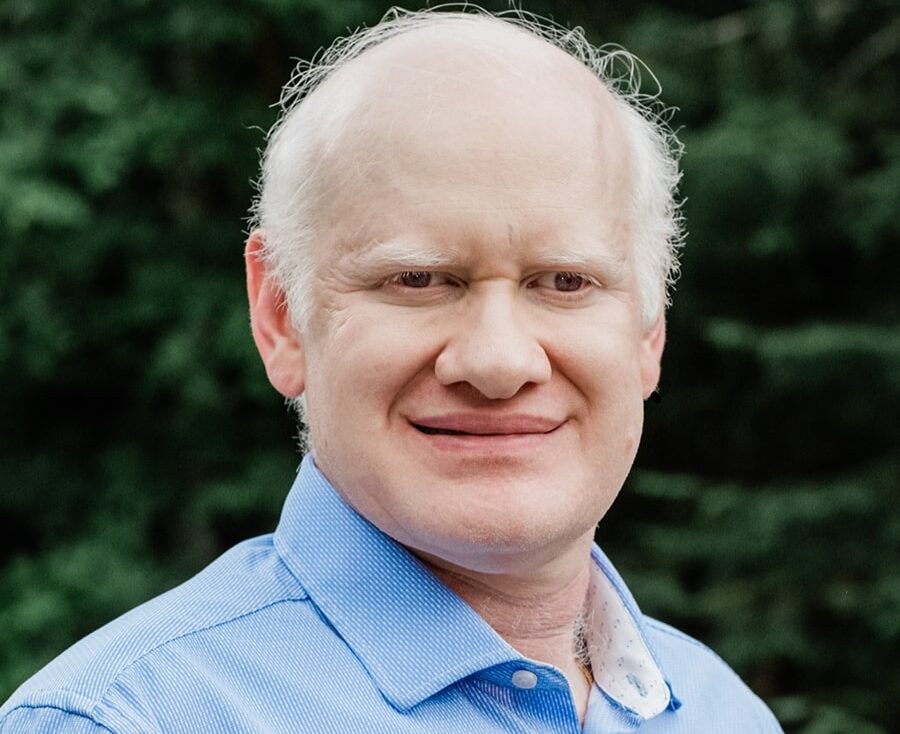
Catalyst by Camber Creek Episode 3, Sandeep Singhal
Sandeep Singhal is a computer engineer’s engineer. He’s held big positions at Microsoft, Google, Meta, and now LinkedIn. Since 2022, when the popularity of ChatGPT forced incumbent tech companies to prioritize artificial intelligence, Sandeep has specialized in AI infrastructure — the systems behind the systems that power important products.
In this episode, Sandeep talks to Camber Creek Head of Platform Lionel Foster and Partner Alexandra Nicoletti about what it takes to succeed in Big Tech, why he remains so committed to helping and learning from startups, and who he thinks might become some of the best AI programmers. You’ll never guess what he says, but the answer will make you mad.
The transcript has been edited for clarity.
Lionel Foster: Sandeep, welcome to Catalyst. Thank you for joining us.
Sandeep Singhal: Thanks, Lionel. Thanks for having me.
Lionel Foster: It is really good to see you. We were incredibly excited about having you on because, as a person in business, in finance, in VC, or even just as a consumer, you hear, “AI this, AI that.” And when I look at your résumé, you have helped build and support a lot of the systems and infrastructure that make some of the AI the world is increasingly using possible. And we thought: we absolutely want his perspective on what’s real, what’s hype, what we might expect, what we can ignore. So I look forward to getting into that with you.
Sandeep Singhal: Excited to talk about it. It’s a very dynamic industry, and a lot of things are changing really fast.
Lionel Foster: You have this amazing background in technology. How and why did you get started? You seem pretty committed to big tech at this point.
Sandeep Singhal: Yeah, so I got started long, long ago as a programmer — probably back in high school or maybe junior high school. I just got addicted to hacking and writing code. For those who remember, you used to get programs printed in the back of magazines, and you’d type them all in — all the byte codes — into your computer. I would spend hours typing those in just to see what the program did.
So I got addicted from an early age to computing and technology. And over the years, the thing that’s really kept me excited is the pace of change. The problems are getting bigger, the scale is getting bigger, and the pace at which we need to operate is getting faster. It keeps the problem space fresh. You always have to reinvent yourself and learn new things.
Lionel Foster: A lot of us were surprised when ChatGPT came out — the first version that was public and consumer-facing. It felt like this explosion of AI’s capability and awareness. Did you see this coming well before that point?
Sandeep Singhal: I think the technology had been there for quite a while. This didn’t happen overnight. The emergence of ChatGPT was a watershed because it made the technology accessible to a very broad audience, very quickly.
And honestly, I had the same aha moment you did. I remember it was right before Thanksgiving — it’s hard to believe it was less than three years ago — and I was at my son’s robotics competition. I was waiting for him to compete, and I was playing on my phone with the technology. I thought, “Wow, this is really cool. There’s something here.”
I made it write an essay about the Russian Revolution, and I thought, This is pretty good. Then I asked it what would happen if I had chest pain and asked it to diagnose me — and it didn’t do so well there. But it was interesting to immediately see both the power and the limitations underneath the technology. And that’s continued to today. A lot of the limitations are getting better, but the fact that this became something people everywhere could use so easily is what made it groundbreaking.
Lionel Foster: You paint a vivid picture — you’re at your son’s robotics competition, you’re on your phone. I’m sure your son didn’t mind that you were watching your phone instead of him… whatever. We’re not going to touch that.
Sandeep Singhal: Most of the day is waiting around anyway. It’s like the army — hurry up and wait.
Lionel Foster: So within hours or minutes of using the technology, were you getting emails or calls from colleagues saying, “What are we going to do? What the heck?”
Sandeep Singhal: It took a little time for people to realize it was a watershed moment. The technology was cool, and in the back of my head I thought, Wow, this is big. But it took me a couple of days to really think, Wait, this is big — and everybody is using it.
It’s rare that new technology shows up on the news. This did. By Monday or Tuesday, I realized this was going to change how we think about technology. So no, my phone didn’t blow up that weekend, but by Monday we had come to realize it was a big deal.
Alexandra Nicoletti: And where were you working at the time?
Sandeep Singhal: I was at Meta.
Alexandra Nicoletti: Was that an overnight shift internally? What did the lead-up look like?
Sandeep Singhal: We didn’t pivot immediately. A lot of work around AI had already been going on for years. No one suddenly started using AI the day ChatGPT came out.
The bigger shift was the move to using language models rather than traditional ranking or recommendation models. The idea that you can generate text or use text in new ways — that was transformative.
It took a year or more for people to fully appreciate that you can use machine learning on text with simple prompts and get powerful results rather than needing massive, specialized data sets. The idea that you can do more with less specialized effort — that was the real shift.
Lionel Foster: Let’s go deeper into how things work internally. At a company with hundreds of thousands of employees, how do you even get a product off the ground? How do you decide what direction something should go?
Sandeep Singhal: There are two pathways.
One is the traditional pathway: product managers and leaders sit in a room, define a vision, develop a plan, and the organization moves toward it. Big shifts — like building the Llama models at Meta — often work that way.
But a lot of innovation doesn’t start top-down. Much of it begins with someone who has an idea, builds a prototype, maybe a Skunk Works project, and starts showing it around. Those ideas often feel more like startups — small, speculative, grassroots — but they can become the most important innovations.
You see both in large companies. And the small sparks often turn into the most interesting things.
Lionel Foster: Alexandra and I work with startups all the time, so part of what I’m hearing is that even inside massive organizations, you still need people with a startup mindset.
Sandeep Singhal: Absolutely. It’s a mindset. I talk to engineers about looking for 10x opportunities — not necessarily products, but anything: internal systems, processes, places where change can have impact. Innovation doesn’t have to be outward-facing.
And leaders need to give people space — maybe a day or two — to just try something out. That’s hard to balance with the urgent work of the business, but it’s important.
And the rise of AI-assisted coding has made prototyping so much easier. You can build something in a day that looks like a working system. Before AI, that was much harder.
Alexandra Nicoletti: I feel tension in our work between efficiency — doing more with less — and encouraging experimentation. Do you see things shifting toward one or the other?
Sandeep Singhal: It’s a constant struggle. The balance between what you must deliver and what you want to explore is very real.
Right now, companies want both efficiency and velocity. The pace of technology and competition is incredibly fast. People are under pressure to get things done quickly without compromising quality or durability.
That makes it harder to create room for exploration. But it’s not new. I would’ve said the same thing 10 years ago. It’s just faster now.
Lionel Foster: You co-founded a startup early in your career. What prompted that, and why move to bigger companies later?
Sandeep Singhal: I started my career at IBM. It was the late ’90s, and everyone was doing a startup, so it seemed like a good idea. I didn’t anticipate the bubble bursting, but it was an exciting time.
I wanted to take that risk early in my career, when it’s easier to absorb. We had ideas about how wireless technology would change the enterprise. It eventually did. We were just early.
Lionel Foster: Before we go deeper into AI, describe your current role.
Sandeep Singhal: I run the core infrastructure team at LinkedIn — networking, storage, compute — all the foundational systems powering LinkedIn’s products, AI services, and data processing. My team focuses on scale, reliability, and making sure the technology meets or stays ahead of product needs.
Alexandra Nicoletti: How do big tech organizations differ from each other?
Sandeep Singhal: Decision-making culture is the biggest difference.
Some companies are very technology-driven and bottom-up. The belief is: if you build the right technology, the right products and customer scenarios will follow.
Others are product-driven: define the experience first, then build the technology around it.
Both lead to innovation but through different paths. And the people making decisions differ — engineers vs. product managers, depending on the company.
Microsoft is a hybrid — strong tech culture plus strong product management.
Lionel Foster: I love that distinction.
Alexandra Nicoletti: For early-stage companies, it’s almost a different stage entirely — they’re starting with the problem, then figuring out product and technology together.
Lionel Foster: You help build systems that make AI possible. I’d imagine your job is harder now than two years ago.
Sandeep Singhal: Definitely. The rise of GPUs has changed almost every dimension of infrastructure — data center design, cooling, power, economics, reliability, scale. AI has upended the traditional compute-network-storage stack. And the landscape keeps shifting as new models and GPUs emerge.
Lionel Foster: What do you love most about what AI can do right now?
Sandeep Singhal: Three things stand out:
- AI-assisted coding. Developers can build faster. Tools like Cursor, ChatGPT, and Copilot accelerate writing, testing, and understanding software.
- Simplifying complex workflows. AI can process large volumes of unstructured data and synthesize it. That transforms many industries.
- Prediction. Using historical patterns to predict failures, vulnerabilities, risks — we’re experimenting with predicting outages before they happen.
Alexandra Nicoletti: That applies to real estate too — identifying risks in underwriting rather than making decisions for you.
Sandeep Singhal: Exactly. I saw a company helping developers predict regulatory issues by analyzing historical planning data. The amount of manual knowledge needed for that is huge.
Lionel Foster: Where does your interest in startups and real estate tech come from?
Sandeep Singhal: In addition to my big-tech job, I’m an active startup investor and involved in several small funds in the Pacific Northwest. I see many AI-powered startups across industries. It helps me stay current, and I enjoy mentoring founders.
Lionel Foster: What do you get out of mentoring startups?
Sandeep Singhal: I learn a lot — new technologies, new ways of thinking. And I find it fulfilling to help founders with product-market fit, technology decisions, roadblocks. Anyone who’s been in the industry a long time accumulates knowledge, and it’s rewarding to share it.
Lionel Foster: Some people believe AI poses an existential risk. What’s your p(doom)?
Sandeep Singhal: Setting aside the “robots will kill us all” scenario, the more realistic risk is economic disruption. Entire classes of jobs are being transformed or eliminated.
Knowledge-work workflows — reading, summarizing, reviewing, approving — are in AI’s crosshairs. The key question is how quickly humans can adapt. Education systems and training programs need to keep up. It took a decade for the internet to become essential. LLMs have done that in three years. That pace is scary.
Alexandra Nicoletti: Is the limiting factor human resistance to change or the capability of the technology?
Sandeep Singhal: Both. It’s not just being able to ask an LLM questions — it’s being able to ask the right questions and apply critical judgment to the answers. It’s a harder skill.
Developers won’t become obsolete, but their job is changing. It’s less about typing code and more about decomposition, design, and evaluating AI-generated output.
Lionel Foster: It sounds like AI requires more integration between humanities and engineering — critical thinking, interpretation, storytelling.
Sandeep Singhal: Exactly. I joked recently that lawyers might become the best software engineers because they’re trained to describe things precisely in text. Storytelling and precision matter more than ever.
Lionel Foster: That’s a dangerous place to end — saying something nice about lawyers. But we respect it. Sandeep, this was fantastic.
Sandeep Singhal: Thank you for having me.
Alexandra Nicoletti: Thank you.