



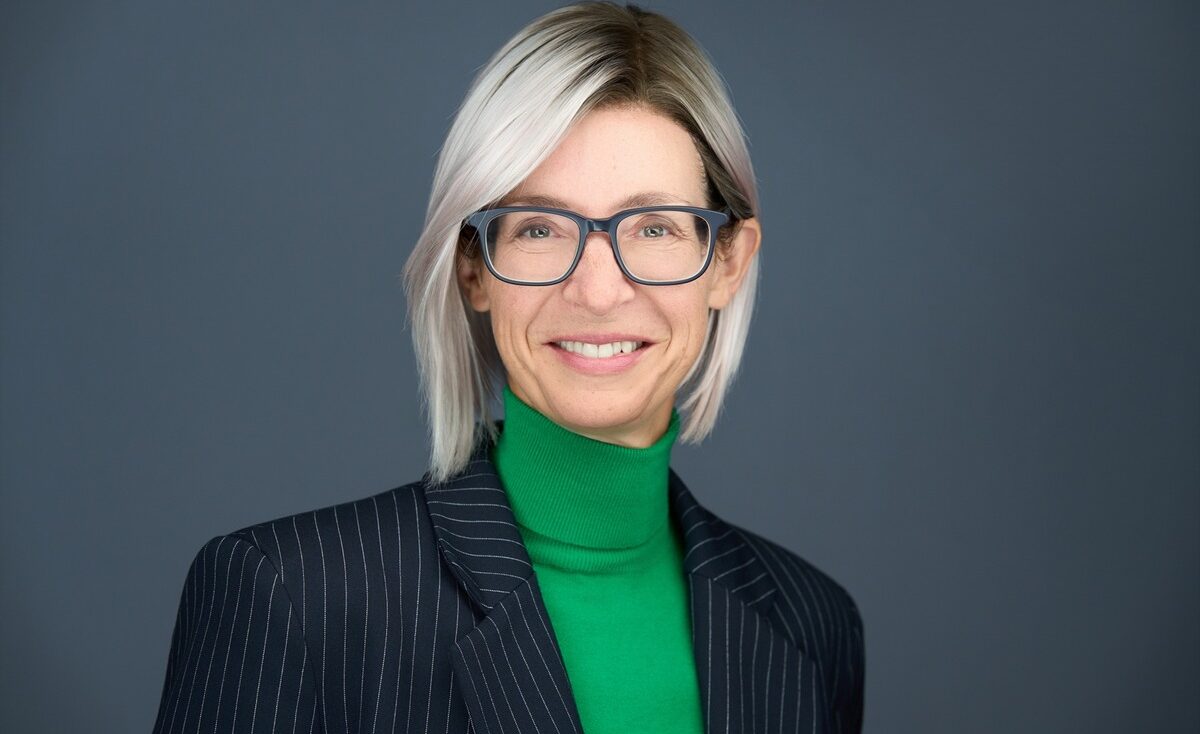
Catalyst by Camber Creek Episode 4, Zoe Hughes
Picture this. You run a conference, a big one. The people who attend your conference represent organizations that collectively manage about $3 trillion in assets, money that supports retirees no less. They come to your event for insight into what they should and should not do, but they won’t get much out of that experience unless they can trust each other with what’s going well and what’s going poorly across massive portfolios.
You shape the environment where all of this happens. So what are you gonna do? How do you handle that? Fortunately, your name is Zoe Hughes. And you have earned a lot of people’s trust. Zoe is CEO of the Pension Real Estate Association, or PREA for short. She is not an investment professional. Her early career was actually in journalism, which makes sense, because she studies people: how they learn, when and why they’re willing to be vulnerable, and how to design spaces that put them at ease, especially when the stakes are high.
Zoe spoke with Camber Creek Head of Platform Lionel Foster and Managing Partner Jake Fingert shortly after PREA’s most recent conference.
The transcript has been edited for clarity.
Lionel Foster: I have personally been attending PREA conferences for many years, and Camber Creek has been going as well. Zoe, you were very clear that you didn’t just not want to do this interview — you didn’t want to do any interview ever.
Zoe Hughes: I did say yes. I still can’t believe it.
Lionel Foster: I was so excited, and while I manage and contain my excitement, I’ll let Jake ask the first question.
Jake Finger: Zoe, thank you for joining us. We’ve been going to PREA for years and have a profound appreciation for the organization and all that it does. Maybe we can start there. If you could tell the audience: what is PREA, and what does it do?
Zoe Hughes: Absolutely. PREA is the Pension Real Estate Association. We were founded 46 years ago, in 1979. Our mission is to serve and educate the global institutional real estate community.
What do we mean by that? We represent institutional investor members, investment manager members, and service providers who focus on the real estate investment ecosystem. Over 46 years, we’ve grown to represent 750 member firms. Of those, about 200 are institutional investors — public pensions, corporate pensions, sovereign wealth funds, endowments, foundations, insurance companies, and private wealth.
Fundamentally, PREA is about the global real estate investment community.
Jake Finger: PREA has had a remarkable journey and has become the preeminent organization in the industry. Every time I attend, I’m struck by how diverse and respected the group of people is. Before we go deeper into PREA, I’d love to hear more about your background. It’s not an obvious path into this role, which I think is part of what makes you such a dynamic leader.
Zoe Hughes: I appreciate you saying that. And you’re right — my background isn’t in real estate.
I’m British, and I’m a journalist by training. I started on local newspapers, then moved into political journalism and spent seven years as a political editor in the Houses of Parliament. I also worked for the Press Association, the UK equivalent of the AP.
My husband’s job brought us to the U.S. in 2007. I wanted to focus on financial journalism, and in February 2008 I started working at Private Equity Real Estate magazine. I didn’t know real estate, the industry, or the players — but it was a pivotal moment. During the financial crisis, people had time, and there was a real willingness to teach me.
I remember sitting with one mentor at a New York conference for an hour and a half while he walked me through CMBS tranching. That’s how I learned the industry. I spent about 10 to 15 years as a journalist and editor before being asked to run an industry association prior to PREA.
Jake Finger: We invest in startups impacting real estate, and one thing I always look for is intellectual curiosity and a desire to find truth. Journalism trains that muscle. As you think about PREA’s future — you’ve been in the role about a year — what are the priorities, and how are you allocating resources?
Zoe Hughes: Right now, we’re still in listening mode as we work on our three-year strategy. What we’ve heard consistently is the importance of serving the heart of PREA’s membership: institutional investors.
Their mission is to invest on behalf of millions of current and future retirees. Their priorities have always been, and will continue to be, risk management, performance, and trust. Their mission is our mission.
Education isn’t just delivering information — it’s helping people understand, gain insight, and connect. PREA’s power is its people. It’s about relationships, friendships, and creating spaces where investors can compare, challenge, and learn from one another.
I think about community through the lens of a journalist. I want people to share candid, authentic, sometimes vulnerable insights. That shared vulnerability builds trust and connection.
Lionel Foster: Let’s talk more about the PREA community. When I explain PREA to people, I say: think of pension funds investing for millions of retirements, and the real estate specialists within those funds who want to be smarter, talk to peers, and know who they can trust. And then there’s the broader ecosystem — managers, service providers, GPs. Did I get that right?
Zoe Hughes: You did. We bring the ecosystem together, with institutional investors at the center.
Lionel Foster: You and I talked about connectivity. Let me share a story. At the last conference, I noticed for the first time there was a 6:00 a.m. run and a 6:00 a.m. walk. On the main conference day. I signed up immediately, ended up on the waitlist, and got in.
I knew the people who would show up — people hungry for genuine interaction. Getting sweaty with people you might do business with later says something.
Zoe Hughes: It was superb. And I think about it slightly differently. We’re very intentional about creating multi-sensory experiences at conferences.
Both of my kids have ADHD, and through learning how they absorb information, I realized something important. We don’t absorb information well by just listening. We disengage within ten minutes. But if we listen, talk, write, move — we stay engaged.
That’s why we use different formats: panels, workshops, movement, conversation. It’s human. It’s how people connect and learn.
Lionel Foster: You’ve ruined me for other conferences by giving language to what I’ve felt for years. We pay thousands of dollars to attend, but we’re really there for the people.
Zoe Hughes: It doesn’t require massive change — just being thoughtful and deliberate. The biggest goal of attending a conference is connection. We can network through content.
Panels still matter, but so do roundtables, discussion, and participation. The conversations in the room are often as valuable as those on stage.
Jake Finger: You’ve talked about engagement, but also trust. How do you build trust — between members, and with PREA itself?
Zoe Hughes: It comes from authentic conversations. PREA needs to be a safe space where investors can be candid and vulnerable. That authenticity is how trust is built.
Lionel Foster: The stakes are high — trillions of dollars. Being vulnerable might mean admitting underperformance.
Zoe Hughes: And investors want to hear that. Cycles have ups and downs. Transparency builds credibility and trust.
Jake Finger: That’s real vulnerability, not contrived vulnerability.
Zoe Hughes: Exactly. It’s about creating safe spaces where people feel comfortable saying what worries them or excites them.
Lionel Foster: Many members ask how to get more involved in PREA. Can you talk about that?
Zoe Hughes: We have affinity groups, committees, research, regional events, Rising Leaders programs, a magazine, webinars. Participation isn’t just in-person. We want more people — especially emerging leaders — involved in shaping PREA’s future.
Lionel Foster: I can say firsthand that involvement pays off. You give time and intellectual capital, and it comes back to you.
Zoe Hughes: And I want to shout out the PREA staff. These meetings involve thousands of people and enormous behind-the-scenes work. It’s intense and impressive.
Lionel Foster: Before we wrap, I want to thank Greg McKinnon and the research team. And I want to emphasize something important: your personal experience with your kids’ learning styles has shaped how thousands of adults learn and connect through PREA.
Zoe Hughes: As we move into a more digital, AI-driven world, being human becomes even more important. AI helps us execute, but value and ROI come from human connection.
Jake Finger: I remember my first PREA conference. I felt a profound sense of responsibility managing money for retirees. PREA carries that responsibility incredibly well.
Zoe Hughes: When I joined PREA as staff, I was struck by the depth of relationships and loyalty. PREA is a connector and curator. The future is about continuing that legacy.
Lionel Foster: Is there anything else you’d like to share?
Zoe Hughes: I just want to explain why I hate being interviewed.
Lionel Foster: As a former reporter, I completely understood. You leaned into discomfort, and I’m grateful you did.
Zoe Hughes: I was absolutely petrified — and I still am.
Jake Finger: You did great. That did not come across at all.
Zoe Hughes: It really makes you think about how we absorb information and make it come alive.
Lionel Foster: Thank you, Zoe.
Zoe Hughes: My pleasure. Thank you for having me.
Lionel Foster: We want to hear from you. If you’re a catalyst changing industries or rewriting a rulebook, email us at catalyst@cambercreek.com, and we might have you on the show.