



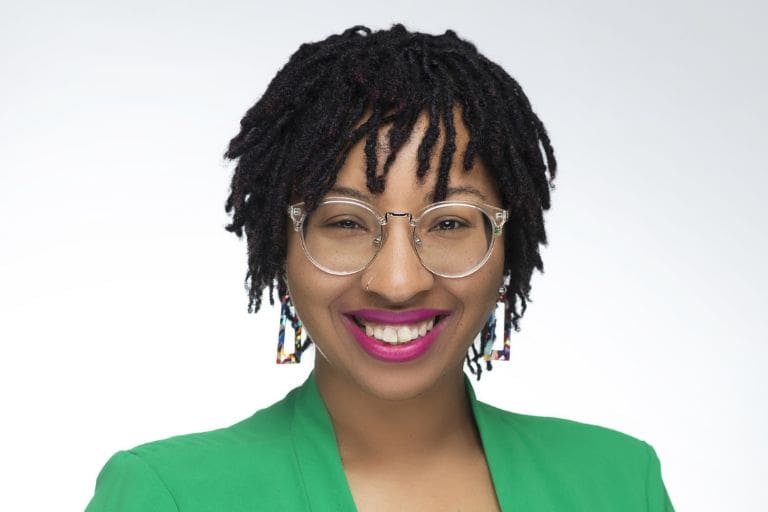
Her Organization Has A Perfect Track Record Preventing Maternal Deaths During Childbirth. But She Knows One Day It Won’t.
Aza Nedhari set out to solve an enormous problem facing women giving birth. The US has the highest rate of maternal death of any high-income country, and within the US, that rate is by far the highest for Black women.
Researchers estimate that most of these deaths are preventable. To fix this, Aza helped invent a new type of community health worker, a perinatal community health worker, coordinating across medical professionals and generations of family members to reshape the environment around expecting mothers.
Over more than a decade, her organization, Mamatoto Village, has a perfect track record,: four thousand families and zero maternal deaths. But what kind of toll does perfection take when navigating complex health systems, economic inequality, and racial bias? And how important is it to celebrate now when you know that eventually, statistically, you will lose at least one?
The transcript has been edited for clarity.
Aza Nedhari: Absolutely. And I think it’s what happens at the bedside. It’s what happens at the point of access to care. That’s another conversation altogether: is care even available in your community, or do you have to travel outside your community to access it?
If you live in a rural community, you may have to plan extensively around care. Sometimes that means traveling two to four hours one way just to get to a provider appointment. If transportation is limited, if you don’t have adequate leave from work, accessing care requires significant planning. People end up making decisions like, “Do I delay care because I need that paycheck? Because I have to feed my family and take care of myself?”
There’s also the research side. Black people have not always been fully represented in medical research. Women have not always been fully represented in research. So when we think about the medicines, practices, and treatments we use, we have to ask: were they designed for us? Were they designed with Black bodies in mind? Were they designed with women in mind? Women’s hormonal systems are different, which can affect how medications work and how treatments should be delivered.
So when we talk about healthcare, there are so many layers. It’s the bedside interaction. Does the provider see you as fully human? Does the provider acknowledge your pain and your experience? Do they recognize that you are the expert on your own body? Then there’s the treatment side. Were the available treatments designed with you in mind? And beyond that, did you have access to everything you needed—not just a portion of it, but everything necessary to be as healthy as you want and deserve to be?
At every layer of this conversation, we come back to choices. Choices made in policy. Choices made in budgeting. Choices made in practice. I always think that behind every outcome is a series of choices, and we’re living today with the outcomes of those choices.
Lionel Foster: Yeah. I remember hearing about the complications Serena Williams experienced when she gave birth. I’m doing this from memory, but I think it was roughly ten years ago.
My recollection is that she reported symptoms, wasn’t necessarily believed immediately, and it had potentially life-threatening consequences. It became major news. Part of the reason, I think, is that many Americans have unfortunately become accustomed to hearing about poor health outcomes among under-resourced populations. That’s wrong, but people almost expect it.
What shocked people was that this was Serena Williams—wealthy, famous, beloved, and with access to extraordinary resources. Yet she nearly died from something preventable.
You were paying closer attention than I was. How do you remember that moment, both within healthcare circles and in the broader public conversation?
Aza Nedhari: Those of us already working in this space weren’t surprised because we live in the data every day. We see the numbers, and we see them playing out in real people’s lives.
What was different was the public reaction. People started saying, “Wait a minute. Serena has money. Serena has access. Serena has the best doctors. She has choices. How could this happen?”
And then people began recognizing something familiar. Women started saying, “I wasn’t listened to either. I had to advocate for myself too. I had to fight to be believed.”
It became a unifying moment because people across different backgrounds could see themselves in the story. They started asking, “What’s the common factor here?”
And eventually the conversation returned to race.
You started seeing story after story from women across the spectrum. Women with supportive partners, financial resources, and access to excellent hospitals who still found themselves dismissed at critical moments. Women who died while trying to become mothers. Women who believed they had done everything right and still weren’t heard.
That was the shock. It forced people to confront something they couldn’t easily explain away. We couldn’t place the burden on income, education, or access alone. People had to sit with the reality that race was part of the story.
Lionel Foster: We’ve talked quite a bit about the problem, the disparities, and some of the reasons behind them. Let’s talk about your approach.
One thing that stands out is the perinatal community health worker model. I had never heard that term until I learned about you and Mama Toto Village. What does your intervention actually look like on the ground?
Aza Nedhari: I’ll start by saying we’re fundamentally a grassroots organization. That’s rooted in my background as a grassroots organizer and social justice advocate. We built the organization around those values.
At its core, Mama Toto is about community. Our theory of change begins with proximity. We don’t see ourselves as separate from the people we serve. We are the same people. We speak the same languages. We eat similar foods. Our family structures often look similar. Many of us live in the same communities.
Another core belief is that health and wellbeing are transmitted across generations. That’s why we take a three-generation approach. We don’t focus only on the mother and baby. We educate partners, grandparents, aunties, cousins, and anyone else involved in the family system. That’s how transformation happens. That’s how health knowledge moves across generations.
Training is another major component. That’s where the Perinatal Community Health Worker, or PCHW, credential comes in. My co-founder, Cassetta Pringle, and I created both the credential and the training program behind it.
The training goes beyond technical education. It requires people to examine themselves. Participants often have to confront their own assumptions, biases, experiences, and histories. Some of those histories involve healing and joy. Others involve trauma.
The training is explicitly rooted in an anti-racist framework. We teach people that being Black does not automatically prevent anti-Black beliefs or practices. We talk openly about colonized mindsets and how they show up in healthcare. We create space to surface those issues, examine them honestly, and work through them.
The goal is that when someone leaves training and begins caring for families, they do so with positive regard, deep respect, and an understanding of people’s resilience and strengths. They learn to meet families where they are.
That’s the broader framework.
In practice, our flagship intervention is a home-visiting model called Mothers Rising. It’s a homegrown model that we’ve continued to refine and are now preparing for broader replication.
We also provide lactation services, childbirth education, and community doula support. Some families want comprehensive support; others need specific services.
The home-visiting model is really the centerpiece. It primarily serves Medicaid beneficiaries, and we contract with all of the DC Medicaid managed care organizations to help support the program financially.
Each participant receives a care team. Every team member has a different specialty, and one person serves as the coordinator who helps manage everything.
At minimum, every participant works with a coordinator and a perinatal community health worker. From there, the team expands based on need. Someone might receive support from a community birth worker, which is our version of a community doula. They may work with a lactation specialist. We have health and wellness specialists who focus on nutrition and physical wellness during pregnancy. We have emotional wellness specialists who provide perinatal mental health support.
We also have care specialists who can provide overnight assistance after a baby is born.
For families dealing with more complex health conditions, we have a nurse who can help with medication management, understanding treatment plans, communicating with providers, and translating medical information into something families can understand and act on.
We’ve been implementing this model for eleven years. Since 2015, we’ve served more than 4,000 families. We’ve maintained a 0% maternal mortality rate. We have never lost a mother in our program.
Our breastfeeding initiation rate is around 89%. Most babies are born full-term, after 37 weeks. Most do not require NICU care.
Many of the families we serve are navigating housing instability, environmental concerns, safety issues, mental health challenges, and other social complexities. Through partnership with those families, we’ve been able to help people stay well, become more stable, and achieve the goals they set for themselves.
Lionel Foster: You mentioned advocacy and communication with providers. I imagine many of the providers are OB-GYNs or others directly involved in maternal care.
How do those relationships play out? I can imagine one provider saying, “I’m so glad this patient has such a strong support team behind her.” I can also imagine another provider wondering, “Who are all these people, and why are they involved?”
What’s the reality?
Aza Nedhari: Over the last decade—and really over the thirteen years since the organization was founded—we’ve invested heavily in relationships.
The relational aspect of our work doesn’t stop with families. We bring the same mindset into our relationships with providers.
We understand that Mama Toto is only one part of a larger system. We’re healthcare-adjacent, and providers are an essential part of a family’s care journey. Regardless of how someone enters the relationship, our approach is always the same: we have to collaborate if we’re going to support families effectively.
So we’ve spent years building trust, explaining what we do, learning about providers’ experiences, and understanding the pressures they face. That’s actually a whole separate conversation. We could spend another hour talking about provider experiences within today’s healthcare system.
But we have to work together as a team. I think that because of the outcomes we’ve achieved, but also because of the relationships we’ve spent years cultivating and developing, providers generally do see us as collaborators and partners. Those relationships matter—not just for us, but for the families we serve.
We also spend a lot of time in training making sure our staff, especially frontline staff and birth workers, understand how to navigate provider relationships and communication. We don’t just send people into healthcare settings and tell them to figure it out. We provide tools and guidance. How do you develop relationships? How do you de-escalate situations when the stakes are high? When do you advocate? When do you yield? When do you educate?
We teach people how to navigate those decisions while making it clear to providers that we are there in partnership with them, but we are also there for the family. We will hold providers accountable for the things they are responsible for, just as we hold ourselves accountable for our role. If everyone does their job well, we can help families reach the end of the journey healthy and whole.
Lionel Foster: Yeah. So we met because I was asked to serve as a panelist for the Ashoka Fellows process. You’re smiling—I suspect there’s a lot behind that smile.
Ashoka is an international network of social entrepreneurs. The foundation searches the world for people whose work is so important that, without them, certain problems might never get solved.
You and Mama Toto Village were identified as fitting that description. The idea was that without Aza and Mama Toto Village, certain advances in maternal and infant health simply might not happen.
So I had the privilege of helping evaluate you. I was given a packet of information, and then I spent an hour asking questions to determine whether you met Ashoka’s very high bar.
One thing really stood out to me. After the interviews concluded, the panelists discussed the applicants. When we talked about Mama Toto Village, one of the things I raised was the statistic that you had served 4,000 families and experienced zero maternal deaths.
I said, “That is astounding.”
Because if you took a similarly situated population that wasn’t receiving Mama Toto’s services, we know the outcomes would be different. The number is remarkable.
At the same time, I wondered aloud whether it’s difficult to keep highlighting that figure. If it ever changes, it could feel awkward to stop emphasizing it. It sets such a high bar.
How do you think about that?
Aza Nedhari: That’s a really good question. It’s both a philosophical question and a practical one.
The reality is that the number could change.
So there’s a tension there. Do you celebrate or not celebrate because something might happen in the future that changes the statistic?
Part of accountability and transparency requires acknowledging that possibility.
We’ve lost babies in our program—not because our staff failed, but because sometimes tragic outcomes happen that are outside anyone’s control. Those outcomes occurred while families were enrolled in our services, and they’re part of the reality of this work.
Lionel Foster: Just to clarify, when we say 4,000 and zero, we’re specifically talking about maternal deaths, correct?
Aza Nedhari: Correct. Zero maternal deaths.
But we’ve absolutely experienced situations where a parent delivered prematurely and the baby did not survive. We’ve had families dealing with extraordinarily complex medical situations. We’ve had stillbirths where no explanation could be identified.
When you’re reporting data, you don’t get to choose only the data that feels good or reinforces a preferred narrative.
Data integrity means talking about the difficult outcomes too.
Then you have to ask yourself: could we have done something differently? If the answer is yes, then we learn from it. If the answer is no, then we acknowledge that reality as well.
But I still think serving that many mothers without losing a mother is something worth celebrating.
It deserves to be recognized.
I hope the number never changes. If someday it does, then we will own that reality too.
I also think the number matters because it makes visible the labor behind the outcome.
I often say that Cassie and I had a dream and a vision, but dreams and visions are only as powerful as the people willing to invest in them and bring them to life.
Not acknowledging that accomplishment would diminish the labor behind it.
I have an incredible team. Our home visitors are incredible. Our administrative staff are incredible. Nearly forty people come together to make this work possible.
Our staff answer the phone during the day, at night, on weekends. They show up.
That’s what lives inside that zero.
How do we protect that zero?
That number represents countless hours of human effort. It represents people who cared deeply and showed up repeatedly. It represents someone answering a 1:00 a.m. phone call when a family had no one else to call.
It represents a mother calling Mama Toto before calling EMS because she trusted our team that much—not that we encourage that, but it speaks to the depth of trust.
It represents seeing a family on day three postpartum, then day four, then one week, then two weeks. It’s all of the touch points, all of the engagement, all of the commitment.
For me, celebrating that number is really about honoring the people who made it possible.
Lionel Foster: Wow. The statistic itself is powerful, but the stories behind it are even more powerful.
One of the things we discussed as panelists was exactly that tension. It’s an extraordinary number to be proud of. The question wasn’t whether it mattered—it clearly does. The question was how to use it honestly and responsibly.
Camber Creek works with a lot of startups, and every company wants key performance indicators that look that impressive. But you have to think carefully about how to communicate them truthfully.
And it seems very clear that you’re doing that.
Aza Nedhari: Absolutely. I have to give credit to our data team. My director, Aaron Snowden, keeps us honest and maintains the integrity of our reporting.
I don’t shy away from uncomfortable truths.
Especially in marketing, there’s often pressure to make everything look positive all the time. But birth, parenting, and this work are messy. It’s not always clean. We don’t always get the outcome we hoped for.
That’s why data integrity matters so much.
It’s important to hold space for the moments when things don’t go according to plan.
Lionel Foster: There’s one moment from my Ashoka interview with you that really stayed with me.
At some point—maybe thirty-eight or forty minutes into the conversation—I said something like, “This work is a grind.”
You’re dealing with death, racial inequality, healthcare systems, organizational leadership, fundraising, staffing—all of it.
I remember saying, somewhat jokingly but also very sincerely, “Girl, how are you doing?”
Aza Nedhari: And then I started crying.
Lionel Foster: And then you started crying.
Why?
Aza Nedhari: It had been a really difficult fourth quarter.
There had been so many moments where I felt like I was holding my breath. The stress was physically present. I felt it in my body.
I was holding myself together by threads.
Then you asked that question while describing all the things I was carrying, and I thought, “Yes. All of that is true.”
Suddenly I had to answer honestly.
How am I doing?
I’m not okay.
That’s how I’m doing.
There was so much wrapped up in that moment.
But honestly, part of it was simply having a Black man ask me that question.
There was a level of care in it.
I knew that question wasn’t on your interview sheet.
Lionel Foster: Correct.
Aza Nedhari: I don’t even remember what we were discussing immediately before that.
But I felt the care in the question.
And once I felt that care, everything hit me at once.
We were having this very intimate conversation about my work, my journey, and the things you were curious about.
And then suddenly there was this moment where the question wasn’t about the organization.
It was simply: “How are you, the person, doing?”
Right. It just felt very caring, and that’s where all of the emotional release came from.
It was one of those moments where I thought, wow, this is something. And honestly, it’s such an important question: “How are you doing, actually?” Or, as you put it, “Girl, how you doing?”
Being a CEO and a social change leader means carrying a lot. We carry our own histories into this work. We carry other people’s stories. We’re witnesses. We’re observers. Sometimes we’re rebels. Sometimes we’re on the front lines. We see the joy, the pain, the fear, and the rage up close. It’s palpable.
At the same time, we’re responsible for people’s livelihoods. We’re responsible for the success or failure of important efforts. Not solely and independently, of course, but at the end of the day people still ask, “Who’s running this organization?”
You sign up for that weight. That’s part of leadership. But it still weighs on you. That’s why people working in social change need both personal and institutional practices that sustain them. It’s why strong boards matter. It’s why leaders need people who hold them in care.
Who’s holding the leader?
You need structures that serve as protective factors so that you can do this work sustainably. So yes, it was a powerful question in the moment, but it was also a moment of vulnerability.
On one level it was, “How are you doing today?” But on another level it was almost, “How are you even doing this?”
Sometimes I have to ask myself the same thing: “Girl, how are you doing this?” And then, “At what cost are you doing it?”
I appreciated a lot about our conversation. I thought about it for weeks afterward. It also prompted me to ask whether I was taking my own advice. I talk all the time about personal sustainability, sustainable parenting, and being sustainable in your work.
But am I doing those things myself?
What am I doing to sustain myself physically, emotionally, and spiritually so that I can show up as the leader—and the human being—I want to be?
Lionel Foster: Was it more jarring to have a compassionate stranger hold up that mirror than someone you know well?
Aza Nedhari: Oh, absolutely. Absolutely.
And honestly, I don’t particularly enjoy crying in public, especially around people I don’t know. That’s vulnerability. That’s exactly what we’ve been talking about.
But at the same time, what a beautiful thing it is to have a truly human moment with another person. To allow vulnerability to exist without judgment.
Even though, in the moment, I was thinking, “I’m crying and I don’t want to be crying,” there was also this realization that my body had made the decision for me. The tears were coming and I couldn’t stop them. So I just had to go with it.
Looking back now, I think it was a beautiful moment.
I hope people have more experiences like that—moments where they can acknowledge that maybe they’re not okay, and where being not okay is itself okay.
There’s no judgment. There’s no requirement to unpack everything immediately.
You asked the question and then allowed the space to become whatever it needed to become.
Lionel Foster: That actually makes me really happy because you experienced it exactly the way I intended. I’m glad I didn’t miss the mark.
One of my last questions—
Aza Nedhari: Wait, are you saying you weren’t trying to make me cry?
Lionel Foster: You know that’s not what I meant.
Aza Nedhari: You’re like, “Mission accomplished.”
Lionel Foster: The thing that makes this sound like it was written for television is that, as part of Ashoka’s process, there’s an observer in the room who says absolutely nothing.
So you and I are having this conversation, and meanwhile there’s a third person sitting quietly in the corner taking notes.
Aza Nedhari: Just watching. She’s crying now.
But you really do forget they’re there. Which is actually a good thing.
The way the questions were asked and the way the conversations unfolded made it easy to forget there was anyone else in the room. Even though these were technically conversations with strangers, they felt like conversations with people I had already met before.
Lionel Foster: Do you have time for one more question?
Aza Nedhari: Mm-hmm.
Lionel Foster: Great.
I know you have a beta version of your own electronic health records platform up and running. My understanding is that it was designed around the needs of Mama Toto Village because traditional EHR systems aren’t necessarily built for organizations that simultaneously track health outcomes and social outcomes in a holistic way.
So tell us more about the software. My understanding is that eventually this becomes a company in its own right, which is pretty exciting.
Aza Nedhari: Yes. We’ve developed a proprietary EHR platform built specifically for perinatal community-based care.
It was designed by us and for organizations like us, which is fairly unique in the technology space. Often the people designing technology aren’t the people actually using it.
Because we designed it ourselves, it’s custom-fit to how we deliver care.
One of the things I’m most excited about is the integration of both health and social factors. It combines aspects of traditional medical records with case management systems into a single platform.
While other systems may have some overlapping functionality, we’ve intentionally built in tools for addressing social needs while also integrating AI.
The AI component is designed to help identify risk and flag concerns. It can act as an assistant reviewing records and noticing patterns.
For example, if someone has reported the same symptom across three separate visits, the system can flag that and say, “You may want to investigate this further. You may want additional labs. This pattern is concerning.”
Instead of normalizing something that may actually be important, the system highlights it.
That’s incredibly powerful—not just in maternal health but across healthcare more broadly.
So those are some of the features we’re especially excited about.
Our long-term goal is to commercialize the platform. We’re actually rolling it out next month, in just a couple of weeks.
Eventually we’d like community health organizations across the country to be able to adopt it and adapt it to their own care models.
As we continue scaling both the platform and our home-visiting model, technology will be an important part of that growth.
Lionel Foster: Wow.
Aza Nedhari: We’re really excited about it.
Lionel Foster: I am excited for you.
Is there anything else you’d like people to know that we haven’t discussed?
Aza Nedhari: A couple of things. We have some exciting developments on the horizon here in the DC region, though some may eventually have broader relevance as well.
One is that we’re working to build a birth center in Washington, DC. It would be the second birth center in the city, but the first located east of the Anacostia River.
We’re also developing a Certified Professional Midwifery training program. It will be a four-year program, and our goal is to achieve accreditation.
Part of our mission is building pathways into midwifery and helping diversify the midwifery workforce.
This is significant because there are very few CPM programs on the East Coast. There is one in Florida, but there are very few opportunities in this region.
Creating more training opportunities ultimately means creating more providers who can support families and offer the types of birth experiences people want.
So those are a few of the things we’re especially excited about right now.
And I’ll close with this: maternal health is everyone’s business.
It’s not just a women’s issue. It’s not just a Mama Toto issue. It’s something that belongs to all of us as a community.
We all share responsibility for the health and wellbeing of mothers.
Thank you for having me.
Lionel Foster: Thank you, Aza. This was great.