



Nurses Have Seen It All—And They See What’s Coming
Nurses are on the front lines of public health. They work in hospitals and sometimes in people’s homes. They’re trained to meet people where they are and communicate across patients, doctors, and policymakers.
Nurses are, in effect, some of the medical field’s best diplomats. And today, those skills are being put to the test. The US population is aging at exactly the same time the federal government is cutting health research funding and creating an environment that incentivizes top talent from around the world to study or work elsewhere.
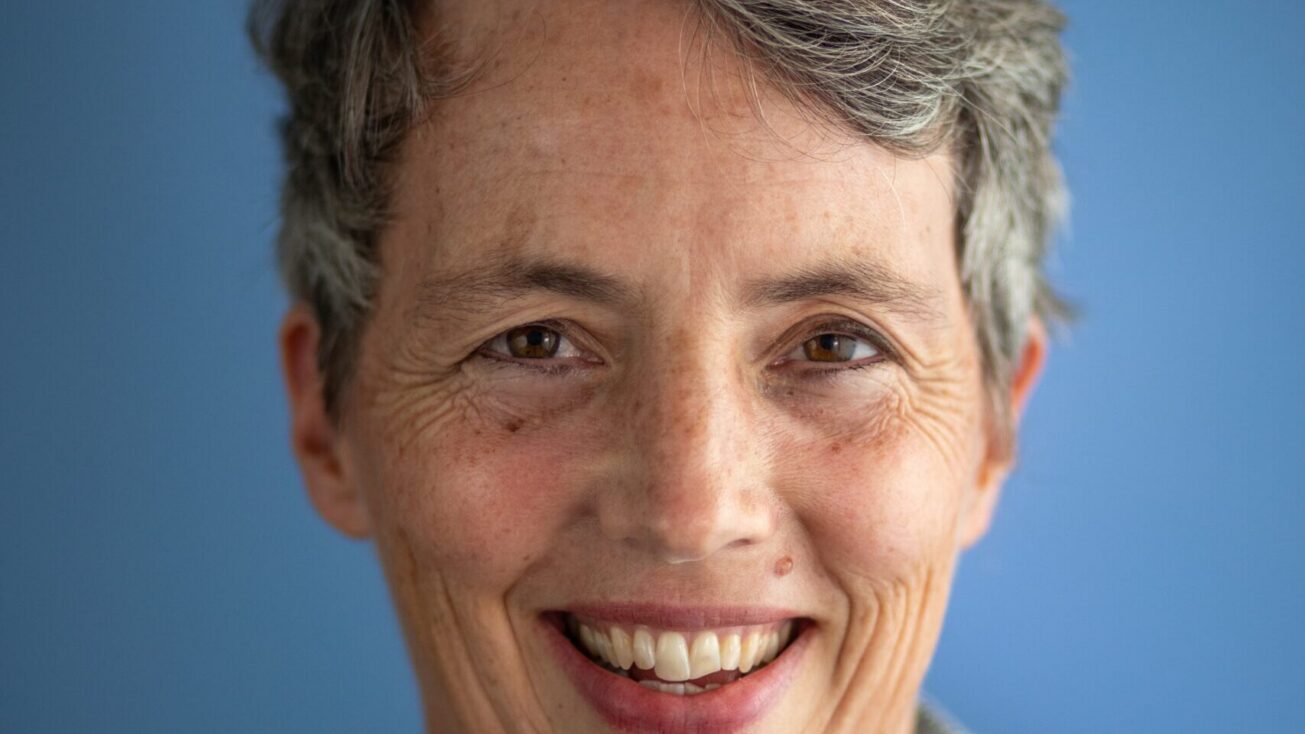
One of the foremost leaders navigating this difficult inflection point is Sarah Szanton, dean of one of the top-ranked schools of nursing in the world at Johns Hopkins University. Sarah sees what’s coming for all of us. By the end of our conversation, I understood that the current problems in US healthcare are real, but nurses like Sarah stand out as a source of hope.
The transcript has been edited for clarity.
Lionel Foster: Sarah, welcome to Catalyst. Thanks for joining.
Sarah Szanton: Thank you for having me. I’m thrilled to be here.
Lionel Foster: All right. So I’ve got all these questions teed up, but I often find you get the best responses when you just ask how people are doing, what’s upmost on their heart and mind right now. You had a really interesting response before we started, so I’ll let you pick up there. What are you dealing with right now?
Sarah Szanton: Thank you so much. I’m thrilled to be here. So I’m Sarah Szanton, the Dean of the Johns Hopkins School of Nursing. We’re the number-one school of nursing in the country, number three in the world.
That has typically meant we’ve led in research—expanding knowledge about health—working in concert with colleagues at the School of Medicine and the School of Public Health at Hopkins. And we’ve had a robust pipeline of people who want to be nurses, nurse practitioners, and nurse scientists.
Both of those are under threat right now, which creates cascading effects in terms of what our faculty and staff are doing and feeling. So what’s on my heart and mind? Both are heavier than they’ve been because of the impacts on those areas.
Lionel Foster: You said there were some difficult conversations. What does that look like day to day?
Sarah Szanton: NIH, the National Institutes of Health, has been very slow to release funding this fiscal year. Even grants that scored extremely well haven’t been released.
We have a grant that scored in the second percentile, better than 98% of others reviewed, and it hasn’t been released. Normally it would have been released in November or December.
That means faculty who expected funding are now facing decisions about letting staff go. And those staff are the people who would produce the research the grant was designed to support.
That leads to cascading consequences—for staff, for faculty trying to hold teams together. And as anyone knows, it’s far better to retain great people than try to rebuild teams later.
So people come to me asking for money, time, and support. Multiply that across 100 faculty, 250 staff, and 1,000 students, and there’s only so much we can do without funding stability.
Lionel Foster: That sounds devastating. I’m sorry. And just to put this in context: Johns Hopkins has been the largest recipient of federal research funding for over 40 years.
Sarah Szanton: That’s right.
Lionel Foster: So you build expertise, are rewarded for it, and then the pipeline compresses, forcing painful decisions.
Sarah Szanton: Exactly. And sometimes people say universities are too reliant on federal funding. I don’t see it that way.
After World War II, Vannevar Bush outlined a system where most research funding would be distributed competitively across the country based on merit. That system has worked very well for decades.
Only about the top 10% of proposals get funded. It’s highly competitive. Institutions like Johns Hopkins have worked hard to succeed in that environment.
This hasn’t been a handout. It’s been earned through merit-based competition.
[Sirens sound.]
Lionel Foster: Also, just a note: the School of Nursing is co-located with the hospital, including the emergency ward.
Sarah Szanton: Yes.
Lionel Foster: So there’s a lot going on.
Sarah Szanton: There is. And again, this system isn’t about handouts. It’s about competing at a very high level. We’ve optimized for that model, and now we have to adapt as it changes.
Lionel Foster: As you explain this, I can’t help but hear the sirens in the background. It feels symbolic.
Sarah Szanton: Exactly. And another issue is a recent federal budget change that caps graduate financial aid for nursing at $20,000 per year.
That’s not enough for many graduate programs, especially those required to become faculty or advanced practitioners.
Over time, that will reduce the number of trained nurses and educators, creating a long-term shortage.
We’re already seeing fewer applicants, and some prospective students may decide they simply can’t afford to pursue these programs.
Lionel Foster: Is that cap specific to nursing?
Sarah Szanton: No. The legislation defines certain “professional programs,” like medicine, dentistry, and clinical psychology, but excludes fields like nursing, teaching, and social work.
Lionel Foster: Got it. It sounds like Hopkins’ School of Nursing might be quite different from the average nursing school—more research-focused, more specialized.
Sarah Szanton: Yes. We do have more research than many nursing schools, but we offer similar core programs.
One difference is that many of our students are career-changers. For example, I worked on Capitol Hill before becoming a nurse.
Our program is a master’s-level entry into nursing, combining clinical training with leadership and policy education. It’s faster—four semesters—but many students already carry undergraduate debt, which adds to the financial challenge.
Lionel Foster: Got it. Let’s talk about how you became a nurse, because I know you studied something else first.
Sarah Szanton: That’s right. So I majored in African American Studies at Harvard in the 1980s. I did my undergraduate research on the Black Panther Party breakfast program.
I knew I wanted to do something in policy. I grew up in Washington, DC. My dad worked in defense policy, and my mom in early childhood development policy. I chose African American Studies partly because it was interdisciplinary, and policy was part of it.
At the time, I didn’t know any nurses and wasn’t interested in nursing at all. But my first job after college was on Capitol Hill, working with reproductive health clinics. Most of the advocates coming to speak with members of Congress were nurses and nurse practitioners.
I was struck by how effective they were as advocates, their ability to communicate. Now that I know more, I understand that nurses are constantly translating between people: patients and families, patients and doctors, nurses and other nurses. That makes them exceptional communicators.
That experience led me to Johns Hopkins for a program designed for people who already had a bachelor’s degree. I met others with similar stories, people who had been in the Peace Corps, consulting, or volunteering in clinics, and realized they wanted to be nurses. That’s our niche.
After that, I worked at Health Care for the Homeless and with migrant farm workers. I later became a nurse practitioner through the University of Maryland then earned my PhD at Hopkins. I’ve been doing research at Johns Hopkins ever since, until becoming dean.
Lionel Foster: So when you commit, you really commit.
Sarah Szanton: I’m all in.
Lionel Foster: Not messing around.
Sarah Szanton: And we like to say, when nurses lead, health moves forward. There are many people here at Johns Hopkins School of Nursing who see nursing as a way to move all of health forward.
Lionel Foster: Let’s talk about the nursing workforce. It seems like there’s tremendous diversity in who becomes a nurse, though in the US the vast majority are women. Why are there so few men in nursing?
Sarah Szanton: It was actually more balanced until the Civil War and the Crimean War. Before then, men were nurses just as much, especially those from military or religious backgrounds. Walt Whitman, for example, served as a nurse in the Civil War.
The gender imbalance developed later, particularly with Florence Nightingale. As nursing became formalized as a profession, there was an effort to define what it was and what it wasn’t.
That process emphasized moral purity, which became associated with femininity, and helped position nursing as a respectable profession for middle-class women. Unfortunately, that also made it more exclusive both in terms of gender and race.
So what had been a more open field became associated with white, middle-class womanhood. Since then, the profession has been working to become more inclusive again.
Today, men make up about 10 to 15% of nurses. In our programs, it’s closer to 20–25%. We want every child to grow up thinking nursing is a great option for them.
Lionel Foster: In many fields, inequities develop gradually, but it sounds like this shift was quite intentional.
Sarah Szanton: Yes. And Florence Nightingale made important contributions. She was one of the first epidemiologists, using data and visualization to improve hospital conditions.
But alongside those contributions, there were also limitations in how the profession was defined.
Lionel Foster: Another demographic point: many nurses in the US are foreign-born. In some states, it’s over 30%. How is current immigration policy affecting your field?
Sarah Szanton: That’s something we worry about. Nursing is a strong career pathway. You can start as a licensed practical nurse and work your way up.
There are two main groups: nurses trained abroad and nurses who immigrate and train here. Both are affected by current restrictions, which could worsen shortages.
At the same time, we have to balance global needs. It’s important not to drain other countries of their healthcare workforce. Ideally, every country has enough trained professionals.
Lionel Foster: Right. And thinking about demographics, every day, 10,000 people in the U.S. turn 65. From your vantage point, what are you seeing?
Sarah Szanton: That’s a powerful statistic. It will continue through the Baby Boom generation, then decline.
But turning 65 doesn’t mean someone is ill. There’s a tendency to oversimplify aging. From 65 to 105 is a 40-year span—longer than many other life stages we treat as a single category.
Some people develop chronic conditions as they age, but the key issue is functional limitation. For example, diabetes becomes more serious when it affects mobility. That’s when people are more likely to be hospitalized or need long-term care.
In healthcare, we aim to keep people healthy and functional for as long as possible. We sometimes joke that the ideal outcome is to be healthy into your 90s and then have a very short decline at the end: ninety-five and shot by a jealous lover
This concept is called compression of morbidity, minimizing the time spent in illness. Most people would prefer that to a long period of decline.
Lionel Foster: Ninety-five and shot by a jealous lover. That sounds like something straight out of a country song. It’s very descriptive. So you’re painting a vision of individual health and population-wide health. I know you think a lot about nursing and community health.
Sarah Szanton: Yep.
Lionel Foster: So please talk about some of the programs you’ve either been a part of or helped design to take what you and your colleagues are creating from the knowledge base in academia out into communities, and sometimes literally into people’s homes.
Sarah Szanton: Great. I’d like to highlight two programs. One is called CAPABLE, which I co-developed with others in 2009. With National Institutes of Health funding, we piloted it and then tested it in randomized control trials.
It’s a four-month program for older adults. It involves a nurse, an occupational therapist, and a handy worker. The older adult identifies what matters most to them: being able to bathe independently, walk to the mailbox, volunteer at a grandchild’s school.
Then the team works together to support those goals. That might mean addressing pain, installing grab bars, or fixing hazards in the home.
We found that CAPABLE cuts disability in half and saves seven times what it costs. It’s now in about 23 states with Medicaid and Medicare Advantage covering it in some places. We’ve worked across multiple administrations to expand it. It’s a nonpartisan concept, supporting dignity and independence for older adults.
The second program is neighborhood nursing. It addresses the fact that the US spends nearly twice as much per person on healthcare as peer countries, yet has worse outcomes than about 180 countries globally.
Lionel Foster: And is that measured per dollar spent?
Sarah Szanton: No: the US spends the most and still has the worst outcomes. It’s not even a value equation.
For decades, this has been a core issue in health policy discussions, but solutions have been limited. The Affordable Care Act was expected to improve outcomes by expanding access, but even in places like Baltimore—where 96% of people are insured—health disparities remain.
Insurance is important, but it’s not sufficient.
Neighborhood nursing draws from models in places like Costa Rica. The idea is to assign a nurse and a community health worker to a defined geographic area.
Everyone would know who their nurse is—like a local public service. The nurse focuses on preventive and minor medical needs, while the community health worker addresses social determinants like food access or equipment needs.
We’ve started this in Baltimore and plan to expand to rural and suburban areas. We’re working with payers and policymakers to create a shared funding model, rather than billing different insurers for each individual.
Lionel Foster: So if you can solve the funding structure, everything flows from there.
Sarah Szanton: Exactly.
We’ve received funding from the Commonwealth Foundation and Johns Hopkins. Recently, we convened payers and actuaries to explore how to make this work at scale.
There are multiple paths forward. The goal is that everyone would have access to a neighborhood nurse—similar to how schools have nurses—but applied to entire communities.
Lionel Foster: Yeah. I want to go back to your point about nurses as communicators, because I’ve experienced some of that firsthand. So you and I—you already know my mom died within the past several weeks. This brings to mind the communication I had with health professionals and emergency responders.
My dad died nine years ago. It was in the hospital—multiple organ failure, a cascade effect. One system failed and took others with it. It was very sad, but I’m grateful I could understand it because a nurse explained it to me.
At the University of Maryland Hospital, I was standing outside his room, asking what could have been prevented. A nurse patiently walked me through his chart and answered my questions.
That experience—losing a parent is always hard—but having clear, compassionate communication makes a difference, even years later.
With my mom, it was very different. There was a police officer acting as a buffer between me and the scene. He thought he was helping by withholding information. It wasn’t until I saw the EMTs and asked directly that I learned there was nothing more they could do.
So there’s a stark contrast between those experiences.
Sarah Szanton: I’m really sorry to hear that. What you’re highlighting is that nursing care extends beyond the patient. That nurse was caring for your dad, but also for you.
That matters because how you understand that moment stays with you for years. Skilled nurses recognize that they’re shaping not just clinical outcomes, but how families process and remember those experiences.
Lionel Foster: So are nurses trained in that kind of communication?
Sarah Szanton: Yes, absolutely. Nursing education is competency-based. That means there are specific skills you must master, including communication.
We’re shifting away from traditional grading toward ensuring students can demonstrate competencies, like having difficult conversations with families or explaining complex systems clearly.
Students practice repeatedly until they get it right. Communication is a core part of nursing education.
Lionel Foster: That aligns with my experience. Are nurses ever asked to train other healthcare workers or emergency responders in communication? Because if not, it seems like they should be.
Sarah Szanton: That’s a great idea. It could even be a new revenue stream. I’m not sure if we do that systematically, but it’s a compelling point.
Improving communication across the broader system—police, judges, other professionals—could significantly improve public health outcomes.
Lionel Foster: And frankly, even doctors.
Sarah Szanton: I’m not going to touch that one.
Lionel Foster: Fair enough.
Doubling back to funding: you mentioned delays and cuts. It seems like the US has historically benefited from attracting global talent, and now that advantage may be eroding.
Sarah Szanton: That’s right. I regularly receive outreach from institutions abroad inviting researchers to relocate.
Many PhD students are starting to consider studying outside the US.
Immigrants play a critical role in innovation and job creation. Countries that restrict immigration, like Japan, face demographic challenges—aging populations without enough younger workers.
If we have more older adults and fewer younger people, immigration becomes essential to sustaining the workforce, especially in healthcare.
Lionel Foster: I’ll try not to make this conversation too heavy, but you’re dealing with serious issues. That said, I see hope in the mindset and training of nurses—their focus on communication and problem-solving.
Are there areas where you see real optimism or progress?
Sarah Szanton: Absolutely. Nurses are problem-solvers and innovators. We’re constantly figuring things out.
Programs like neighborhood nursing are widely supported. The challenge is funding, not the idea itself.
If we can demonstrate effectiveness and secure funding, we could see transformative changes, like having a nurse accessible in your community, whether through an app or in everyday spaces like libraries.
Those kinds of solutions could significantly improve national health outcomes.
Lionel Foster: Is there anything I haven’t asked that you’d like to share?
Sarah Szanton: We like to say that when times are tough, we’re tougher. Nurses are not afraid of crisis. We will help get this nation through challenging times.
Lionel Foster: Thank you, Sarah.
Sarah Szanton: Thank you, Lionel. I appreciate it.