



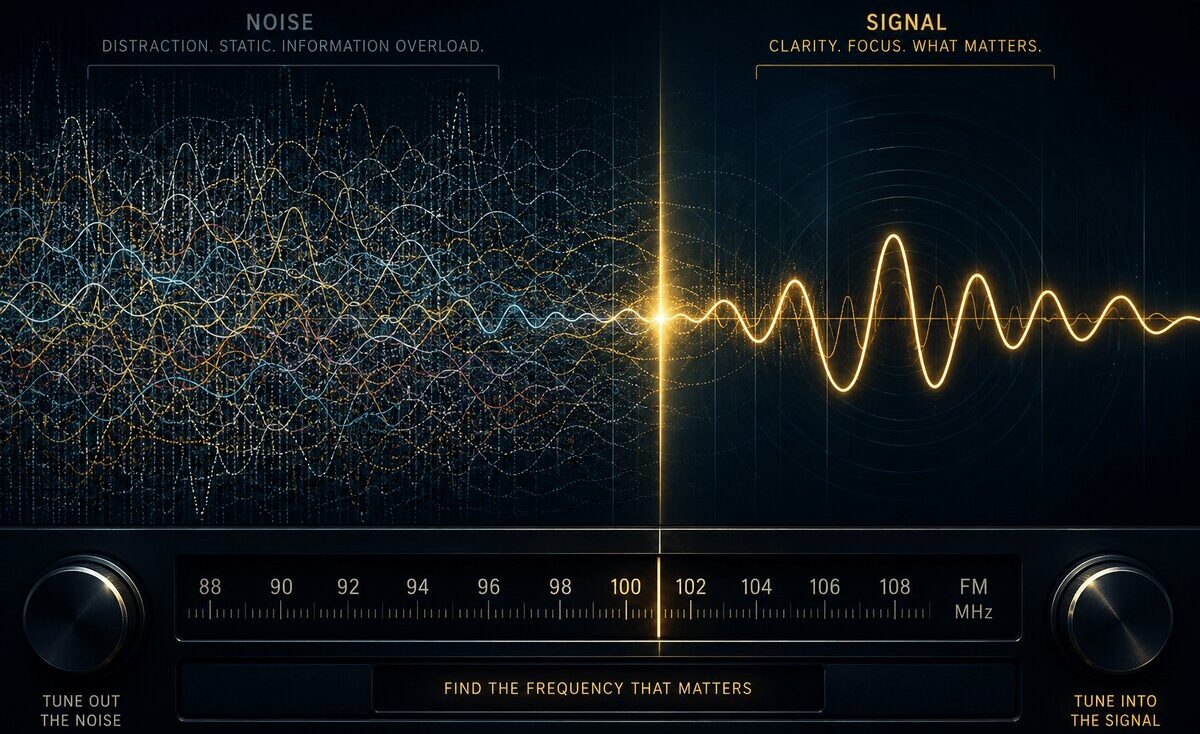
When Building A Business, Tune Your Ears To Hear The Signal in the Noise
Brad Hargreaves has seen nearly every version of the startup journey. He has built companies from scratch, scaled globally, raised more than $100 million, navigated painful setbacks, and seen a $412 million exit with the sale of General Assembly.
But on Camber Creek’s Catalyst podcast, Hargreaves argued that his real superpower is much simpler: learning how to recognize signals about what’s working, move aggressively toward them, and tune out the noise.
That sounds obvious. In practice, it can be extraordinarily difficult.
Aloysius Properties: The First Signal
Hargreaves’ entrepreneurial instincts showed up early. While an undergraduate at Yale University, he discovered the university was liquidating old wooden card catalogs for $50 apiece. He and a friend bought one and sold it on eBay for $3,000.
That was the signal.
Most people would have treated it as a lucky flip. Hargreaves treated it as data. He and his co-founder started returning every Friday with cash, buying surplus furniture by the truckload and reselling it online under the intentionally old-fashioned brand name “Aloysius Properties.”
The lesson wasn’t simply that there was demand for vintage furniture. It was that markets reveal themselves through behavior. One surprisingly successful sale became a repeatable business because Hargreaves acted quickly once he saw evidence that something was working.
General Assembly: Pulling on the Right Signal
After graduating into the financial crisis, Hargreaves and his co-founders noticed another disconnect. Companies desperately needed employees with practical digital skills like web development and UX design, but traditional education systems were not producing them. General Assembly was born from that insight.
But Hargreaves emphasized that the company did not begin with a perfect business model. In fact, the first General Assembly campus was mostly coworking space. The education component occupied only a small portion of the building.
Then the founders noticed something important: the classrooms were generating the strongest response.
“When we built our second campus, like 18 months later, it was all classroom space,” Hargreaves explained. “It was less about, ‘Oh, we nailed it from day one,’ and more like we did something that was kind of close enough where we were able to find signal and pull on that signal.”
The company kept iterating. Eventually, enterprise training contracts—not the consumer education business most people associated with General Assembly—became the biggest driver of enterprise value. In 2018, the company sold to Adecco Group for $412 million.
Common: Knowing When the Signal Changes
Hargreaves’ next company, Common, started with another clear signal. While scaling General Assembly campuses in cities like New York and San Francisco, Hargreaves noticed that students and employees weren’t looking for apartments—they were looking for rooms and flexible living arrangements. Craigslist roommate searches were chaotic and inefficient. That pain point led Common to pioneer professionally managed co-living housing.
Investor enthusiasm exploded. Common raised more than $100 million as the broader “space as a service” trend accelerated alongside the rise of WeWork.
But eventually the signals changed.
The pandemic disrupted urban living patterns. Interest rates rose. Projects slowed. And Hargreaves began questioning whether the business could sustainably scale as a fragmented property management operation spread across too many cities.
What makes his story compelling is not that he avoided failure. It’s that he recognized when the market reality shifted and acted decisively.
In early 2022, despite still having cash in the bank, Hargreaves concluded the company likely had a narrow window to sell. The outcome was not ideal financially, but he believed continuing to raise money and delaying difficult decisions would only prolong the pain.
“And so we had a window to sell the company and get a return,” he said, “I saw as being fairly narrow.”
Entrepreneurship rewards optimism, but survival often depends on emotional discipline, the ability to separate durable signals from temporary noise.
Listen to the full conversation on the podcast.